Lichen ruber moniliformis: Difference between revisions
CSV import |
CSV import |
||
| Line 31: | Line 31: | ||
{{Medicine-stub}} | {{Medicine-stub}} | ||
{{No image}} | {{No image}} | ||
<gallery> | |||
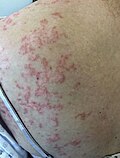
File:Keratosis lichenoids chronichus1.jpg|Lichen ruber moniliformis | |||
</gallery> | |||
Revision as of 01:48, 20 February 2025
Lichen Ruber Moniliformis is a rare skin condition characterized by the appearance of moniliform (bead-like) lichenoid eruptions. This condition is a variant of Lichen Planus, which is a common inflammatory disease affecting the skin and mucous membranes. Lichen Ruber Moniliformis, also known as Lichen Planus Moniliformis, presents unique clinical features that distinguish it from the typical presentations of Lichen Planus.
Etiology
The exact cause of Lichen Ruber Moniliformis remains unknown. However, it is believed to be an autoimmune condition where the immune system mistakenly attacks the skin cells. Factors that may contribute to the development of this condition include genetic predisposition, viral infections, stress, and reactions to certain medications or chemicals.
Clinical Features
Lichen Ruber Moniliformis is characterized by the presence of moniliform, lichenoid papules that can coalesce to form linear or serpiginous patterns. These lesions are typically pruritic (itchy) and can appear anywhere on the body but are most commonly found on the limbs and trunk. The skin between the papules may appear normal or slightly erythematous (reddened).
Diagnosis
Diagnosis of Lichen Ruber Moniliformis is primarily clinical, based on the characteristic appearance of the skin lesions. A skin biopsy may be performed to confirm the diagnosis and to rule out other conditions with similar presentations. Histopathological examination typically shows features consistent with Lichen Planus, such as hyperkeratosis, acanthosis, and a band-like lymphocytic infiltrate at the dermoepidermal junction.
Treatment
Treatment of Lichen Ruber Moniliformis aims to relieve symptoms and reduce inflammation. Options may include topical corticosteroids, systemic corticosteroids for more severe cases, and immunosuppressive agents. Phototherapy has also been used with some success. Due to the rarity of the condition, treatment is often based on the management of classic Lichen Planus.
Prognosis
The prognosis for Lichen Ruber Moniliformis is generally good, with many cases resolving spontaneously over time. However, the condition can be persistent and may recur, requiring long-term management.
Epidemiology
Lichen Ruber Moniliformis is a rare condition, and its exact prevalence is unknown. It can occur in individuals of any age, gender, or ethnicity, but it appears to be more common in adults.
See Also

-
 Lichen ruber moniliformis

