Reticular membrane: Difference between revisions
CSV import |
CSV import |
||
| Line 30: | Line 30: | ||
[[Category:Physiology]] | [[Category:Physiology]] | ||
[[Category:Medical Terminology]] | [[Category:Medical Terminology]] | ||
<gallery> | |||
File:Organ of corti.svg|Reticular membrane | |||
File:Gray932.png|Reticular membrane | |||
File:Gray929.png|Reticular membrane | |||
File:Cochlea-crosssection.svg|Reticular membrane | |||
</gallery> | |||
Latest revision as of 01:40, 20 February 2025
Reticular Membrane[edit]
The reticular membrane is a specialized structure found in various tissues and organs of the human body. It is composed of a network of reticular fibers, which are thin and delicate collagen fibers, and reticular cells, which are specialized cells that produce and maintain the reticular fibers. The reticular membrane plays a crucial role in providing structural support and maintaining the integrity of the tissues and organs it is present in.
Structure[edit]
The reticular membrane is primarily composed of reticular fibers, which are thin and branching collagen fibers. These fibers form a mesh-like network that provides a framework for the cells and other components of the tissue. The reticular fibers are produced and maintained by reticular cells, which are specialized cells found within the reticular membrane. These cells secrete the necessary proteins and enzymes required for the synthesis and maintenance of the reticular fibers.
Function[edit]
The main function of the reticular membrane is to provide structural support and maintain the integrity of the tissues and organs it is present in. It forms a scaffold-like structure that helps to organize and support the cells and other components of the tissue. In certain organs, such as the lymph nodes, spleen, and bone marrow, the reticular membrane also plays a crucial role in the filtration and transportation of various substances.
Clinical Significance[edit]
Alterations in the structure or function of the reticular membrane can have significant clinical implications. For example, in certain diseases, such as fibrosis, the reticular membrane can become thickened and stiff, leading to impaired tissue function. Additionally, abnormalities in the reticular membrane can affect the filtration and transportation processes in organs like the lymph nodes, potentially leading to immune system dysfunction.
See Also[edit]
References[edit]
<references />
-
 Reticular membrane
 -
 Reticular membrane
 -
 Reticular membrane
 -
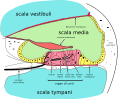 Reticular membrane


