Hexahydrocannabutol: Difference between revisions
CSV import |
CSV import |
||
| Line 33: | Line 33: | ||
{{pharmacology-stub}} | {{pharmacology-stub}} | ||
{{No image}} | {{No image}} | ||
== Hexahydrocannabutol == | |||
<gallery> | |||
File:HHCB structure.png|Hexahydrocannabutol | |||
</gallery> | |||
Revision as of 01:32, 20 February 2025
Hexahydrocannabutol (also known as HHC) is a cannabinoid that is found in cannabis. It is a homologue of tetrahydrocannabinol (THC), which is the primary psychoactive compound in cannabis.
Chemistry
Hexahydrocannabutol is a cyclic compound that consists of a six-membered ring. It is a terpenoid, which is a class of naturally occurring organic chemicals that are derived from five-carbon isoprene units. The structure of hexahydrocannabutol is similar to that of THC, but it has an additional carbon atom in the ring.
Pharmacology
The pharmacological effects of hexahydrocannabutol are not well-studied. However, it is known to bind to the cannabinoid receptors in the brain and other parts of the body. This binding activity is thought to be responsible for the psychoactive effects of the compound.
Medical uses
There is currently limited research on the potential medical uses of hexahydrocannabutol. However, due to its similarity to THC, it is possible that it may have similar therapeutic effects. These could potentially include pain relief, reduction of nausea and vomiting, and appetite stimulation.
Legal status
The legal status of hexahydrocannabutol varies by country and region. In some places, it is classified as a controlled substance, while in others it is legal for medical or recreational use.
See also
References
<references />

Hexahydrocannabutol
-
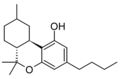 Hexahydrocannabutol

