Tomographic reconstruction: Difference between revisions
CSV import Tags: mobile edit mobile web edit |
CSV import |
||
| Line 21: | Line 21: | ||
[[Category:Vascular surgery]] | [[Category:Vascular surgery]] | ||
{{stub}} | {{stub}} | ||
== Tomographic reconstruction == | |||
<gallery> | |||
File:Tomographic reconstruction- Projection, Back projection and Filtered back projection.webm|Tomographic reconstruction | |||
File:Tomographic fig1.png|Tomographic reconstruction | |||
File:Ct skull.jpg|Tomographic reconstruction | |||
File:Fan-beam reconstruction of Shepp-Logan Phantom.jpg|Tomographic reconstruction | |||
File:DeepLearningReconstruction.png|Tomographic reconstruction | |||
File:Sinogram Source - Two Squares Phantom.svg|Tomographic reconstruction | |||
File:Sinogram Result - Two Squares Phantom.png|Tomographic reconstruction | |||
File:Algebraic Reconstruction Technique - animated.gif|Tomographic reconstruction | |||
</gallery> | |||
Latest revision as of 01:28, 20 February 2025
Therapeutic angiogenesis is a form of treatment that uses the body's natural ability to grow new blood vessels to improve blood flow to areas of the body that are not receiving enough blood due to blocked or damaged blood vessels. This treatment is often used for conditions such as coronary artery disease and peripheral artery disease.
Mechanism of Action[edit]
Therapeutic angiogenesis works by stimulating the growth of new blood vessels from existing ones, a process known as angiogenesis. This is achieved through the introduction of growth factors, such as vascular endothelial growth factor (VEGF) and fibroblast growth factor (FGF), into the affected area. These growth factors bind to receptors on the surface of endothelial cells, triggering a series of events that lead to the formation of new blood vessels.
Clinical Applications[edit]
Therapeutic angiogenesis has been studied for use in a variety of medical conditions, including:
- Coronary artery disease: In patients with coronary artery disease, therapeutic angiogenesis can help improve blood flow to the heart muscle, reducing symptoms such as chest pain and shortness of breath.
- Peripheral artery disease: For patients with peripheral artery disease, therapeutic angiogenesis can help improve blood flow to the legs, reducing pain and improving mobility.
- Diabetic foot ulcers: Therapeutic angiogenesis can help improve healing in patients with diabetic foot ulcers by increasing blood flow to the affected area.
Risks and Challenges[edit]
While therapeutic angiogenesis holds promise, there are several challenges and risks associated with this treatment. These include the potential for uncontrolled growth of blood vessels, which could lead to complications such as bleeding or the growth of tumors. Additionally, the delivery of growth factors to the affected area can be challenging, and the effects of the treatment may not be long-lasting.
Future Directions[edit]
Research is ongoing to improve the effectiveness and safety of therapeutic angiogenesis. This includes the development of new delivery methods for growth factors, as well as the identification of new targets for therapy.
 | |
|---|---|
 |
 |
Tomographic reconstruction[edit]
-
 Tomographic reconstruction
 -
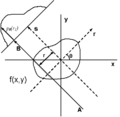 Tomographic reconstruction
 -
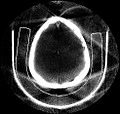 Tomographic reconstruction
 -
 Tomographic reconstruction
 -
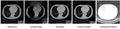 Tomographic reconstruction
 -
 Tomographic reconstruction
 -
 Tomographic reconstruction
 -
 Tomographic reconstruction


