Koulourakia: Difference between revisions
CSV import Tags: mobile edit mobile web edit |
CSV import |
||
| Line 24: | Line 24: | ||
{{food-stub}} | {{food-stub}} | ||
{{No image}} | {{No image}} | ||
<gallery> | |||
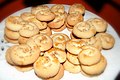
File:Koulourakia.jpg|Koulourakia | |||
</gallery> | |||
Revision as of 01:23, 20 February 2025
Koulourakia are a traditional Greek dessert, typically made during the Easter season. They are a type of cookie that is hand-shaped into various forms, including circles, braids, and 'S' shapes. The name 'koulourakia' comes from their circular shape, as 'kouloura' means 'circle' in Greek.
Ingredients
Koulourakia are made from simple, everyday ingredients. The main ingredients include flour, sugar, butter, eggs, and vanilla extract. Some variations may also include orange zest, baking powder, and a touch of brandy or ouzo for flavor. The cookies are often topped with sesame seeds before baking.
Preparation
The preparation of koulourakia involves mixing the ingredients together to form a dough, shaping the dough into the desired forms, and then baking the cookies until they are golden brown. The dough is typically quite dense, which allows it to hold its shape during baking. After baking, the cookies are often glazed with an egg wash to give them a shiny finish.
Cultural Significance
Koulourakia are a staple in Greek households during the Easter season. They are often made on Holy Thursday and are served after the Midnight Resurrection Service on Easter Sunday. The cookies are also often given as gifts to friends and family during this time.
Variations
While the basic recipe for koulourakia remains the same, there are many regional variations throughout Greece. Some regions add spices like anise or cinnamon, while others may add nuts or dried fruit. The shape of the cookies can also vary, with some regions preferring simple round cookies and others creating intricate braided designs.
See Also
This article is a Greek cuisine stub. You can help WikiMD by expanding it!

-
 Koulourakia

