Menma: Difference between revisions
CSV import Tags: mobile edit mobile web edit |
CSV import |
||
| Line 23: | Line 23: | ||
{{Japanese-food-stub}} | {{Japanese-food-stub}} | ||
{{food-stub}} | {{food-stub}} | ||
<gallery> | |||
File:Tokyoramen.jpg|Menma | |||
File:Japanese Hosaki Menma.jpg|Menma | |||
</gallery> | |||
Latest revision as of 01:22, 20 February 2025
Menma is a popular Japanese condiment made from fermented bamboo shoots. The bamboo shoots are dried in the sun or through a drying process before being fermented. Menma is often used as a topping for ramen, a type of Japanese noodle soup.
History[edit]
The origin of menma is believed to be in China, where it is known as mei sun. It was introduced to Japan through trade and quickly became a staple in Japanese cuisine. The process of making menma involves fermenting the bamboo shoots in a mixture of salt, rice bran, and chili pepper.
Production[edit]
The production of menma begins with the harvesting of bamboo shoots. The shoots are then boiled and dried before being fermented. The fermentation process can take anywhere from a few weeks to several months, depending on the desired flavor and texture. Once the fermentation process is complete, the menma is ready to be used in a variety of dishes.
Culinary Uses[edit]
Menma is most commonly used as a topping for ramen. It adds a unique, slightly sweet and tangy flavor to the dish. In addition to ramen, menma can also be used in stir-fries, salads, and other dishes. It is often paired with other ingredients such as soy sauce, miso, and sesame oil to enhance its flavor.
Health Benefits[edit]
Menma is rich in dietary fiber and contains a variety of vitamins and minerals. It is also low in calories, making it a healthy addition to any meal. The fermentation process used to make menma also produces beneficial bacteria that can aid in digestion.
See Also[edit]

-
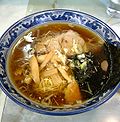 Menma
Menma -
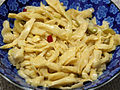 Menma
Menma


