Saddle nose: Difference between revisions
CSV import |
CSV import |
||
| Line 34: | Line 34: | ||
[[Category:Medical conditions]] | [[Category:Medical conditions]] | ||
[[Category:ENT]] | [[Category:ENT]] | ||
<gallery> | |||
File:Facies of Heredosyphilis 5.jpg|Saddle nose | |||
File:Jmc2028e-g005.jpg|Saddle nose | |||
</gallery> | |||
Revision as of 01:22, 20 February 2025
Saddle Nose is a medical condition characterized by a noticeable loss of height or collapse of the bridge of the nose. This condition is often associated with various diseases and conditions, including congenital syphilis, relapsing polychondritis, Wegener's granulomatosis, cocaine abuse, and trauma to the nose.
Causes
The primary cause of Saddle Nose is damage to the septum, the structure that separates the two nostrils and supports the nose. This damage can occur due to a variety of reasons, including:
- Congenital syphilis: This is a condition that a baby is born with as a result of the mother having syphilis during pregnancy. It can cause a variety of symptoms, including saddle nose.
- Relapsing polychondritis: This is a rare disease characterized by inflammation of cartilage and other tissues throughout the body. It can cause damage to the septum, leading to saddle nose.
- Wegener's granulomatosis: This is a rare disease that causes inflammation of the blood vessels, which can lead to damage to the septum.
- Cocaine abuse: Regular use of cocaine can cause damage to the septum, leading to saddle nose.
- Trauma: Any injury to the nose can potentially damage the septum and lead to saddle nose.
Symptoms
The most noticeable symptom of Saddle Nose is a change in the shape of the nose, specifically a loss of height or collapse of the bridge. Other symptoms can include:
- Difficulty breathing through the nose
- Frequent nosebleeds
- Pain or discomfort in the nose
Treatment
Treatment for Saddle Nose typically involves surgery to repair the damaged septum and restore the normal shape of the nose. This can often be done using a procedure called rhinoplasty, which involves reshaping the nose.
See Also
 | This medical article is a stub. You can help WikiMD by expanding the page. |
-
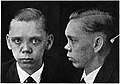 Saddle nose
 -
 Saddle nose


