Sōmen: Difference between revisions
CSV import |
CSV import |
||
| Line 36: | Line 36: | ||
File:Five-colour_somyeon_1.jpg|Five-colour somyeon | File:Five-colour_somyeon_1.jpg|Five-colour somyeon | ||
File:Somyeon.jpg|Somyeon | File:Somyeon.jpg|Somyeon | ||
</gallery> | |||
<gallery> | |||
File:Somen 001.jpg|Sōmen | |||
File:TofuSeller1500.jpg|Sōmen | |||
File:Simple somen.jpg|Sōmen | |||
File:Nagashi somen by tasteful tn.jpg|Sōmen | |||
File:Janchi-guksu.jpg|Sōmen | |||
File:Korean noodles-Kongguksu-01.jpg|Sōmen | |||
File:Bibim-guksu.jpg|Sōmen | |||
File:Golbaengi-muchim.jpg|Sōmen | |||
File:Five-colour somyeon 1.jpg|Sōmen | |||
File:Somyeon.jpg|Sōmen | |||
</gallery> | </gallery> | ||
Latest revision as of 01:20, 20 February 2025
Sōmen is a type of thin Japanese noodles made from wheat flour. It is a popular dish in Japan and is traditionally served cold, making it a common meal during the hot summer months.
History[edit]
The history of Sōmen dates back to the Nara period (710-794), when it was introduced to Japan from China. The noodles were originally handmade and were considered a luxury item, often served at ceremonial occasions. Over time, the production process became more mechanized, making Sōmen more accessible to the general public.
Production[edit]
Sōmen is made by kneading wheat flour with salt water, then stretching and thinning the dough into long, slender strands. The noodles are then dried, a process that can take several days. The quality of Sōmen is determined by its thinness and smoothness. Some regions in Japan, such as Hyogo Prefecture, are particularly known for their high-quality Sōmen production.
Preparation and Serving[edit]
Sōmen is typically boiled and then rinsed under cold water to cool it down. It is often served with a dipping sauce called tsuyu, made from soy sauce, mirin, and dashi. The noodles can also be served with various toppings, such as thinly sliced scallions, grated ginger, and shiso leaves.
In addition to being served cold, Sōmen can also be used in hot dishes, such as nyumen, where the noodles are served in a hot broth with vegetables and meat.
Cultural Significance[edit]
Sōmen holds a significant place in Japanese culture. One popular tradition is nagashi-sōmen, where the noodles are placed in a long bamboo chute with flowing water. Participants must catch the noodles as they flow by, a fun and challenging way to enjoy the dish.
See Also[edit]

-
 Sōmen
Sōmen -
 Sōmen
Sōmen -
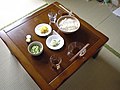 Sōmen
Sōmen -
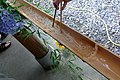 Nagashi Sōmen
 -
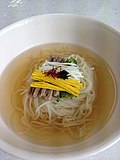 Janchi-guksu
 -
 Kongguksu
 -
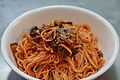 Bibim-guksu
 -
 Golbaengi-muchim
 -
 Five-colour somyeon
 -
 Somyeon


-
Sōmen
-
Sōmen
-
Sōmen
-
Sōmen
-
Sōmen
-
Sōmen
-
Sōmen
-
Sōmen
-
Sōmen
-
Sōmen
