Kurnool: Difference between revisions
CSV import |
CSV import |
||
| Line 26: | Line 26: | ||
{{geography-stub}} | {{geography-stub}} | ||
<gallery> | |||
File:Skyline of Kurnool from Penna River Bridge.jpg|Skyline of Kurnool from Penna River Bridge | |||
File:23 - Telugu Talli Statue with Kondareddy Buruju as background.JPG|Telugu Talli Statue with Kondareddy Buruju as background | |||
File:Pumphouse road in Kurnool.jpg|Pumphouse road in Kurnool | |||
File:View of Kurnool City from Abhayanjaneya Swamy Idol - Jagannatha Gattu - Kurnool City 2.jpg|View of Kurnool City from Abhayanjaneya Swamy Idol | |||
File:Kurnool Railway station board.jpg|Kurnool Railway station board | |||
</gallery> | |||
Latest revision as of 01:19, 20 February 2025
Kurnool is a city in the southern part of India, serving as the administrative headquarters of the Kurnool district in the Andhra Pradesh state. It is known for its historical significance, cultural heritage, and natural resources, making it an important city in the region. Kurnool is often referred to as "The Gateway of Rayalaseema" due to its location at the entrance of the Rayalaseema region, which comprises the southeastern part of Andhra Pradesh.
History[edit]
Kurnool has a rich history that dates back to several centuries. The city has been under the rule of various kingdoms and empires, including the Cholas, Kakatiyas, Vijayanagara Empire, and the Sultanate of Golconda. Kurnool was also a part of the British Empire in India, which has left a significant impact on its architecture and infrastructure.
Geography[edit]
Kurnool is located on the southern banks of the Tungabhadra River, surrounded by rocky hills and fertile plains. The city experiences a semi-arid climate, with high temperatures in the summer and moderate temperatures during the winter. The Nallamala Hills to the east contribute to the city's scenic beauty and biodiversity.
Economy[edit]
The economy of Kurnool is diverse, with agriculture, industry, and services playing significant roles. The city is known for its production of crops such as cotton, chili, and groundnuts. Additionally, Kurnool has a growing industrial sector, with industries in cement, textiles, and iron and steel. The service sector, including education, healthcare, and retail, also contributes to the city's economy.
Culture[edit]
Kurnool's culture is a blend of traditional and modern influences. The city celebrates various festivals with great enthusiasm, including Sankranti, Diwali, and Eid. Kurnool is also known for its cuisine, which features a mix of Andhra and Rayalaseema dishes. The Kurnool Fort, Konda Reddy Buruju, and the ruins of the palace of Gopal Raju (the last Hindu king) are significant cultural landmarks.
Education[edit]
Kurnool is an educational hub in the Rayalaseema region, hosting several colleges and universities. Prominent institutions include Kurnool Medical College, Rayalaseema University, and several engineering and arts and science colleges. These institutions offer a wide range of courses in various fields, contributing to the educational development of the region.
Transport[edit]
Kurnool is well-connected by road, rail, and air. The city lies on the National Highway 44 (NH-44), making it accessible from major cities like Hyderabad and Bangalore. The Kurnool City Railway Station is an important rail junction, providing connectivity to different parts of the country. Additionally, the Kurnool Airport, also known as Orvakal Airport, facilitates air travel to and from the city.
Tourism[edit]
Kurnool attracts tourists with its historical sites, natural beauty, and cultural festivals. Key attractions include the Kurnool Fort, Belum Caves, Oravakallu Rock Garden, and the Rollapadu Wildlife Sanctuary. These sites offer a glimpse into the city's history, geology, and biodiversity, making Kurnool a notable destination for travelers.

-
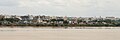 Skyline of Kurnool from Penna River Bridge
 -
Telugu Talli Statue with Kondareddy Buruju as background
-
Pumphouse road in Kurnool
-
View of Kurnool City from Abhayanjaneya Swamy Idol
-
Kurnool Railway station board


