Quinestradol: Difference between revisions
CSV import Tags: mobile edit mobile web edit |
CSV import |
||
| Line 24: | Line 24: | ||
{{Pharma-stub}} | {{Pharma-stub}} | ||
{{Medicine-stub}} | {{Medicine-stub}} | ||
<gallery> | |||
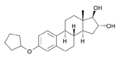
File:Quinestradiol structure.png|Quinestradiol | |||
</gallery> | |||
Revision as of 01:13, 20 February 2025
Quinestradol is a synthetic estrogen that is used in hormone replacement therapy (HRT). It is a derivative of estradiol, the primary female sex hormone, and is used to treat symptoms of menopause such as hot flashes and vaginal dryness.
Pharmacology
Quinestradol is a synthetic estrogen, which means it mimics the effects of the natural hormone in the body. It binds to estrogen receptors in various tissues, including the uterus, breast, and brain, and activates them, leading to a range of effects.
Medical uses
Quinestradol is used primarily in hormone replacement therapy for menopausal women. It can help to alleviate symptoms such as hot flashes, night sweats, mood swings, and vaginal dryness and atrophy. It may also be used in the treatment of osteoporosis, as estrogen can help to maintain bone density.
Side effects
As with all medications, quinestradol can have side effects. These may include nausea, bloating, breast tenderness, and headache. In rare cases, it can increase the risk of blood clots, stroke, and certain types of cancer.
History
Quinestradol was first synthesized in the 1960s as part of a wave of new synthetic estrogens. It has been used in hormone replacement therapy since the 1970s.
See also


-
 Quinestradiol

