Lahpet: Difference between revisions
CSV import |
CSV import |
||
| Line 38: | Line 38: | ||
[[Category:Tea]] | [[Category:Tea]] | ||
[[Category:Fermented foods]] | [[Category:Fermented foods]] | ||
<gallery> | |||
File:Green tea and peanut nibbles (10808703485).jpg|Green tea and peanut nibbles | |||
File:Lahpet Tasters.JPG|Lahpet Tasters | |||
File:Lahpet for sale.jpg|Lahpet for sale | |||
File:Fried garnish.JPG|Fried garnish | |||
File:Laphet thoke.JPG|Laphet thoke | |||
File:Lahpet in bulk.JPG|Lahpet in bulk | |||
File:Pickled Tea |Pickled Tea | |||
File:Palaung depiction, 1900s.jpg|Palaung depiction, 1900s | |||
File:Lahpet stall.JPG|Lahpet stall | |||
File:Tea leaves drying.jpg|Tea leaves drying | |||
File:Pickled tea (lahpet).JPG|Pickled tea (lahpet) | |||
</gallery> | |||
Revision as of 01:06, 20 February 2025
A traditional Burmese fermented tea leaf salad
Lahpet, also known as laphet, is a traditional Burmese dish made from fermented or pickled tea leaves. It is a unique delicacy in Myanmar and is often served as a salad, known as lahpet thoke. Lahpet is not only a popular food item but also holds cultural significance in Burmese society.
History
The consumption of lahpet dates back to ancient times in Myanmar, where tea is grown extensively in the northern regions, particularly in the Shan State. The practice of fermenting tea leaves is believed to have originated as a method of preserving tea for long periods. Over time, lahpet became a symbol of hospitality and was traditionally offered to guests as a gesture of goodwill.
Preparation
The preparation of lahpet involves several steps. Fresh tea leaves are harvested and steamed to prevent oxidation. They are then packed into bamboo vats and left to ferment for several months. The fermentation process gives lahpet its distinctive flavor, which is slightly bitter and tangy.
Once fermented, the tea leaves are mixed with a variety of ingredients to make lahpet thoke. Common ingredients include:
The salad is typically garnished with crispy fried garlic and served with a squeeze of lime juice.
Cultural Significance
In Burmese culture, lahpet is more than just a food item; it is a symbol of peace and reconciliation. Traditionally, lahpet was served during important negotiations and peace talks. It is also a staple at social gatherings and ceremonies, where it is shared among friends and family.
Health Benefits
Lahpet is rich in antioxidants due to its tea leaf content. It is believed to aid digestion and provide a boost of energy. However, due to its fermentation process, it is also high in sodium, so it should be consumed in moderation.
Consumption
Lahpet can be consumed in various forms. While lahpet thoke is the most popular, lahpet can also be enjoyed as a snack, where the fermented tea leaves are served with a selection of nuts and seeds. In some regions, lahpet is used as an ingredient in soups and other dishes.
Related pages
-
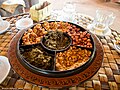 Green tea and peanut nibbles
 -
 Lahpet Tasters
 -
 Lahpet for sale
 -
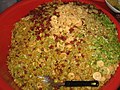 Fried garnish
 -
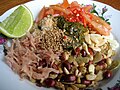 Laphet thoke
 -
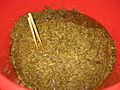 Lahpet in bulk
 -
Pickled Tea
-
 Palaung depiction, 1900s
 -
Lahpet stall
-
Tea leaves drying
-
Pickled tea (lahpet)
.jpg)


.JPG)