Regeneration in humans: Difference between revisions
CSV import Tags: mobile edit mobile web edit |
CSV import |
||
| Line 44: | Line 44: | ||
{{Medicine-stub}} | {{Medicine-stub}} | ||
<gallery> | |||
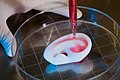
File:Earproject - 2x3 (6127848729).jpg|Regeneration in humans | |||
</gallery> | |||
Latest revision as of 01:05, 20 February 2025
Regeneration in Humans
Regeneration in humans refers to the physiological process by which the body replaces or restores damaged or lost tissues, organs, and cells. Unlike in some animals, such as salamanders and starfish, which can regenerate entire limbs or organs, human regenerative capacity is significantly more limited. However, research in the fields of tissue engineering and regenerative medicine is aimed at enhancing the human body's natural regenerative abilities.
Types of Human Regeneration[edit]
Human regeneration can be categorized into two main types: regeneration of cells and regeneration of tissues and organs.
Cell Regeneration[edit]
Cell regeneration occurs continuously in the human body, replacing cells that have died due to normal cellular processes or injury. Examples include the regeneration of skin cells, red blood cells, and cells in the intestinal lining.
Tissue and Organ Regeneration[edit]
Tissue and organ regeneration involves the repair or replacement of larger structures. This is more complex and less common than cellular regeneration. Examples include the healing of bone fractures, the regeneration of liver tissue, and, to a lesser extent, the repair of heart muscle cells after a heart attack.
Mechanisms of Regeneration[edit]
The mechanisms underlying human regeneration involve a variety of cellular and molecular processes, including:
- Stem Cells: Undifferentiated cells that can divide and differentiate into various cell types. They play a crucial role in repairing damaged tissues.
- Cell Proliferation: The process by which cells divide to replace lost or damaged cells.
- Cell Differentiation: The process by which cells become specialized to perform specific functions.
- Extracellular Matrix (ECM): A complex network of proteins and other molecules that provides structural and biochemical support to surrounding cells. The ECM plays a key role in tissue regeneration.
Limitations of Human Regeneration[edit]
While humans possess some regenerative capabilities, there are significant limitations. For example, humans cannot regenerate entire limbs or organs such as the heart or brain to their full functional capacity. This limitation is due in part to the complexity of these structures and the limited regenerative capacity of the cells involved.
Regenerative Medicine[edit]
Regenerative medicine is a branch of medicine that aims to develop methods to repair, replace, regenerate, and improve the functions of damaged or diseased cells, tissues, and organs. This field utilizes various approaches, including:
- Stem Cell Therapy: The use of stem cells to repair or replace damaged tissues or organs.
- Tissue Engineering: The creation of artificial organs or tissues in the laboratory for implantation.
- Gene Therapy: The introduction of new genes into a patient's cells to treat disease.
Future Directions[edit]
The future of human regeneration lies in advancing the fields of regenerative medicine and tissue engineering. Ongoing research aims to unlock the full regenerative potential of the human body, potentially leading to the ability to regenerate damaged organs and tissues fully, much like some lower organisms.
See Also[edit]

-
 Regeneration in humans
.jpg)
