Bell's mania: Difference between revisions
CSV import |
CSV import |
||
| Line 43: | Line 43: | ||
{{Medicine-stub}} | {{Medicine-stub}} | ||
<gallery> | |||
File:Dopamine Transporter Meth.jpg|Dopamine Transporter Meth | |||
File:Dopamine Pathways cs.png|Dopamine Pathways | |||
File:Etizolam.jpg|Etizolam | |||
File:Ketmine Injection.jpg|Ketamine Injection | |||
File:Luther V. Bell.jpg|Luther V. Bell | |||
</gallery> | |||
Revision as of 01:04, 20 February 2025
Bell's Mania, also known as Manic Syndrome, is a psychiatric condition characterized by an abnormally elevated mood state. It is important to distinguish Bell's Mania from Bipolar Disorder, where the individual experiences episodes of both mania and depression. Bell's Mania refers specifically to the manic phase, without the depressive episodes associated with bipolar disorder.
Symptoms
Symptoms of Bell's Mania can include, but are not limited to:
- Increased energy, activity, and restlessness
- Excessively "high," overly good, euphoric mood
- Extreme irritability and distractibility
- Decreased need for sleep without feeling tired
- Racing thoughts and talking very fast, jumping from one idea to another
- Uncharacteristically poor judgment
- Increased sexual drive
- Abuse of drugs, particularly cocaine, alcohol, and sleeping medications
- Provocative, intrusive, or aggressive behavior
- Denial that anything is wrong
A key feature of Bell's Mania is that the behaviors are not typical for the individual when they are not experiencing mania.
Causes
The exact cause of Bell's Mania is not known, but it is believed to be a combination of genetic and environmental factors. Changes in the brain's neurotransmitter systems are also believed to play a crucial role. Factors that may contribute to the condition include:
- Genetic predisposition
- Brain structure and functioning
- Environmental stressors
- Substance abuse
Diagnosis
Diagnosis of Bell's Mania involves a comprehensive clinical assessment, including a detailed psychiatric evaluation and medical history. The DSM-5 (Diagnostic and Statistical Manual of Mental Disorders, Fifth Edition) criteria for mania may be used as a guideline for diagnosis. It is crucial to rule out other medical conditions or substance-induced mania.
Treatment
Treatment for Bell's Mania typically involves a combination of medication and psychotherapy. Medications may include mood stabilizers, antipsychotic drugs, and sometimes antidepressants. Psychotherapy approaches such as Cognitive Behavioral Therapy (CBT) and Family Therapy can be effective in managing symptoms and improving functioning.
Prognosis
With appropriate treatment, individuals with Bell's Mania can manage their symptoms and lead productive lives. However, they may be at risk for future manic episodes, particularly if treatment is not maintained.
See Also

-
 Dopamine Transporter Meth
 -
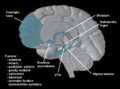 Dopamine Pathways
 -
 Etizolam
 -
 Ketamine Injection
 -
 Luther V. Bell


