Cyanotoxin: Difference between revisions
CSV import |
CSV import |
||
| Line 39: | Line 39: | ||
{{stub}} | {{stub}} | ||
== Cyanotoxin == | |||
<gallery> | |||
File:Cyanobacterial Scum.JPG|Cyanobacterial Scum | |||
File:Satellite image of cyanobacteria bloom in the Great Lakes.png|Satellite image of cyanobacteria bloom in the Great Lakes | |||
File:Formation of cyanobacterial blooms.jpg|Formation of cyanobacterial blooms | |||
File:Microcystin-LR.svg|Microcystin-LR | |||
File:Nodularin R.svg|Nodularin R | |||
File:Anatoxin-a.png|Anatoxin-a | |||
File:Cylindrospermopsin.png|Cylindrospermopsin | |||
File:Saxitoxin.svg|Saxitoxin | |||
File:Toxin transmission from cyanobacteria to the bald eagle.jpg|Toxin transmission from cyanobacteria to the bald eagle | |||
File:Aetokthonotoxin.png|Aetokthonotoxin | |||
File:Anatoxin-a-S.png|Anatoxin-a-S | |||
</gallery> | |||
Revision as of 00:56, 20 February 2025
Cyanotoxin is a class of toxins produced by certain species of cyanobacteria. These toxins can be harmful to other organisms, including humans, and are a concern in water treatment and public health.
Overview
Cyanotoxins are produced by cyanobacteria, a group of bacteria that obtain their energy through photosynthesis. They are capable of producing a variety of toxins, which can have different effects on human health. Some cyanotoxins can cause skin irritation, while others can affect the liver or nervous system.
Types of Cyanotoxins
There are several types of cyanotoxins, including:
- Microcystins: These are the most common type of cyanotoxins and can cause liver damage.
- Nodularins: These toxins are similar to microcystins and can also cause liver damage.
- Anatoxins: These toxins affect the nervous system and can cause symptoms such as muscle twitching and respiratory paralysis.
- Cylindrospermopsins: These toxins can cause liver damage and are also a potential carcinogen.
Health Effects
Exposure to cyanotoxins can occur through ingestion, inhalation, or skin contact. The health effects can vary depending on the type of toxin and the amount of exposure. Symptoms can range from mild, such as skin irritation and nausea, to severe, such as liver damage and respiratory paralysis.
Prevention and Treatment
Preventing exposure to cyanotoxins is primarily achieved through proper water treatment. This includes monitoring for the presence of cyanobacteria and cyanotoxins in water sources and using appropriate treatment methods to remove them.
Treatment for exposure to cyanotoxins depends on the type of toxin and the severity of the symptoms. This can include supportive care, such as hydration and symptom management, as well as specific treatments for certain types of toxins.
See Also
 | |
|---|---|
 |
 |
Cyanotoxin
-
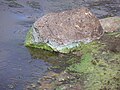 Cyanobacterial Scum
 -
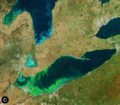 Satellite image of cyanobacteria bloom in the Great Lakes
 -
 Formation of cyanobacterial blooms
 -
 Microcystin-LR
 -
 Nodularin R
 -
 Anatoxin-a
 -
Cylindrospermopsin
-
Saxitoxin
-
Toxin transmission from cyanobacteria to the bald eagle
-
Aetokthonotoxin
-
Anatoxin-a-S


