Copper in biology: Difference between revisions
CSV import Tags: mobile edit mobile web edit |
CSV import |
||
| Line 33: | Line 33: | ||
{{Chemistry-stub}} | {{Chemistry-stub}} | ||
{{Biochemistry-stub}} | {{Biochemistry-stub}} | ||
<gallery> | |||
File:Copper metabolism.png|Copper metabolism | |||
File:Thylakoid membrane.png|Thylakoid membrane | |||
File:ARS copper rich foods.jpg|Copper rich foods | |||
</gallery> | |||
Latest revision as of 00:52, 20 February 2025
Copper in Biology
Copper is an essential trace element that plays a vital role in the biological systems of most organisms, including humans. It is involved in a variety of biological processes, including the functioning of enzymes, the regulation of gene expression, and the maintenance of nerve cell health. Copper's importance in biological systems can be attributed to its ability to cycle between two oxidation states, Cu(I) and Cu(II), which enables it to participate in redox reactions and electron transport.
Biological Role[edit]
Copper is a component of several enzymes, known as cuproenzymes, which are crucial for aerobic respiration, antioxidant defense, and connective tissue formation. Some of the key cuproenzymes include cytochrome c oxidase, which is involved in cellular respiration; superoxide dismutase, which protects cells from damage by reactive oxygen species; and lysyl oxidase, which is essential for the cross-linking of collagen and elastin, thereby contributing to the structural integrity of connective tissues.
In addition to its role in enzymes, copper is involved in the regulation of gene expression. It influences the activity of transcription factors, proteins that bind to specific DNA sequences and control the transfer of genetic information from DNA to mRNA. Copper's ability to affect gene expression is crucial for maintaining cellular health and responding to environmental changes.
Copper Homeostasis[edit]
Maintaining copper balance, or homeostasis, is critical for health. The body regulates copper levels through absorption, storage, and excretion mechanisms. Copper is absorbed in the small intestine, and its uptake is influenced by dietary factors, including the presence of other minerals that can compete for absorption. Once absorbed, copper is transported to the liver, where it is incorporated into proteins and enzymes or stored for future use. Excess copper is excreted through bile.
Disruptions in copper homeostasis can lead to either copper deficiency or toxicity. Copper deficiency can result in anemia, neutropenia, bone abnormalities, and neurological problems. Conversely, copper toxicity, which is less common, can cause oxidative damage to cells and tissues, leading to liver and kidney damage, and neurological disorders.
Copper in Diet[edit]
Copper is found in a wide variety of foods, including nuts, seeds, shellfish, whole grains, and dark chocolate. The recommended daily intake of copper varies by age, sex, and health status, but for most adults, it is approximately 900 micrograms per day. A balanced diet typically provides sufficient copper for most people, but supplements are available for those with specific health conditions that affect copper absorption or utilization.
Environmental and Health Concerns[edit]
While copper is essential for biological functions, environmental exposure to high levels of copper can pose health risks. Copper can enter the environment through mining, farming, manufacturing operations, and improper waste disposal. In drinking water, high levels of copper can cause gastrointestinal distress and, over long periods, may contribute to liver or kidney damage.
Conclusion[edit]
Copper's role in biology is multifaceted, contributing to critical enzymatic reactions, gene expression regulation, and overall health. Understanding copper's biological importance, maintaining proper dietary intake, and managing environmental exposure are essential for health and well-being.

.svg)
This article is a biochemistry stub. You can help WikiMD by expanding it!
-
 Copper metabolism
 -
 Thylakoid membrane
 -
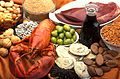 Copper rich foods


