Alpine tundra: Difference between revisions
CSV import |
CSV import Tags: mobile edit mobile web edit |
||
| Line 9: | Line 9: | ||
File:Himalaja-Tahr.JPG|Himalayan Tahr | File:Himalaja-Tahr.JPG|Himalayan Tahr | ||
</gallery> | </gallery> | ||
==Alpine Tundra== | |||
The '''alpine tundra''' is a biome that occurs in mountainous regions around the world at elevations above the tree line. This unique ecosystem is characterized by its cold climate, short growing seasons, and limited vegetation. Unlike the [[arctic tundra]], the alpine tundra is not defined by latitude but by altitude. | |||
===Climate=== | |||
The climate of the alpine tundra is cold and windy, with temperatures often dropping below freezing at night, even during the summer months. The growing season is short, typically lasting only 60 to 90 days. Precipitation is generally low, but snow can be abundant, and the wind can be strong, leading to harsh living conditions for plants and animals. | |||
===Flora=== | |||
Vegetation in the alpine tundra is adapted to withstand the cold temperatures and short growing seasons. Common plant species include [[mosses]], [[lichens]], [[grasses]], and small [[shrubs]]. These plants are typically low-growing to resist the strong winds and conserve heat. The soil is often rocky and nutrient-poor, further limiting plant growth. | |||
===Fauna=== | |||
The animal life in the alpine tundra is also adapted to the extreme conditions. Common animals include [[marmots]], [[pikas]], [[mountain goats]], and various species of [[birds]] such as the [[alpine chough]]. These animals have adaptations such as thick fur, fat reserves, and behaviors that help them survive the cold and find food in a sparse environment. | |||
===Adaptations=== | |||
Both plants and animals in the alpine tundra have developed unique adaptations to survive. Plants often have deep root systems to anchor them in the rocky soil and to access water. Animals may migrate to lower elevations during the winter or hibernate to conserve energy. | |||
===Human Impact=== | |||
Human activities such as [[tourism]], [[skiing]], and [[hiking]] can impact the fragile alpine tundra ecosystem. Trampling by hikers can damage the delicate vegetation, and climate change poses a significant threat by altering temperature and precipitation patterns. | |||
==Related Pages== | |||
* [[Arctic tundra]] | |||
* [[Mountain ecosystem]] | |||
* [[Permafrost]] | |||
* [[Ecology]] | |||
{{Biome}} | |||
[[Category:Biomes]] | |||
[[Category:Mountain ecology]] | |||
Latest revision as of 00:41, 19 February 2025
-
 Hikers on Franconia Ridge
 -
 Valle de Mifafí
 -
 Tarfala Valley, Sweden
 -
 Snowy River in Sněžné hory
 -
 Phacelia sericea
 -
 Flat Tops tundra
 -
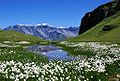 Glarus Alps
 -
 Himalayan Tahr


Alpine Tundra[edit]
The alpine tundra is a biome that occurs in mountainous regions around the world at elevations above the tree line. This unique ecosystem is characterized by its cold climate, short growing seasons, and limited vegetation. Unlike the arctic tundra, the alpine tundra is not defined by latitude but by altitude.
Climate[edit]
The climate of the alpine tundra is cold and windy, with temperatures often dropping below freezing at night, even during the summer months. The growing season is short, typically lasting only 60 to 90 days. Precipitation is generally low, but snow can be abundant, and the wind can be strong, leading to harsh living conditions for plants and animals.
Flora[edit]
Vegetation in the alpine tundra is adapted to withstand the cold temperatures and short growing seasons. Common plant species include mosses, lichens, grasses, and small shrubs. These plants are typically low-growing to resist the strong winds and conserve heat. The soil is often rocky and nutrient-poor, further limiting plant growth.
Fauna[edit]
The animal life in the alpine tundra is also adapted to the extreme conditions. Common animals include marmots, pikas, mountain goats, and various species of birds such as the alpine chough. These animals have adaptations such as thick fur, fat reserves, and behaviors that help them survive the cold and find food in a sparse environment.
Adaptations[edit]
Both plants and animals in the alpine tundra have developed unique adaptations to survive. Plants often have deep root systems to anchor them in the rocky soil and to access water. Animals may migrate to lower elevations during the winter or hibernate to conserve energy.
Human Impact[edit]
Human activities such as tourism, skiing, and hiking can impact the fragile alpine tundra ecosystem. Trampling by hikers can damage the delicate vegetation, and climate change poses a significant threat by altering temperature and precipitation patterns.
