Lichen
Lichen is a composite organism that arises from algae or cyanobacteria (or both) living among filaments of a fungus in a symbiotic relationship. The combined life form has properties that are very different from the properties of its component organisms. Lichens come in many colors, sizes, and forms. The properties are sometimes plant-like, but lichens are not plants. Lichens may have tiny, leafless branches (fruticose), flat leaf-like structures (foliose), flakes that lie on the surface like peeling paint (crustose), or other growth forms.
Classification[edit]
Lichen classification is complex and still subject to debate. It is generally agreed that lichens are classified as fungi, under the genus and species of the host fungus. The algal or cyanobacterial component of a lichen also has its own genus and species.
Morphology[edit]
Lichens may appear as a thin, crust-like covering on rocks, soil, tree bark, or leaves. They may also appear as shrubby or leafy growths, or hanging strands. The body of a lichen, known as a thallus, is generally composed of a fungal filament (hyphae) network, within which are embedded the algal or cyanobacterial cells.
Reproduction[edit]
Lichens reproduce either by tiny pieces of the lichen breaking off and growing somewhere else (vegetative reproduction) or by the production of fungal spores. The fungal partner is solely responsible for sexual reproduction.
Ecology[edit]
Lichens play an important role in the environment. They are pioneers on bare rock, and they help to turn rock into soil. Lichens also provide food and shelter for a variety of organisms.
Uses[edit]
Lichens have many uses. They have been used in making dyes, perfumes, and medicines. Some lichens are also used as indicators of air pollution.
See also[edit]
References[edit]

This WikiMD article can only be edited by registered and verified editors. You can log in or register.
-
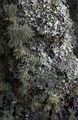 Lichen
 -
Lichen
-
Lichen
-
Lichen
-
Lichen
-
Lichen
-
Lichen
-
Lichen
-
Lichen
-
Lichen
-
Lichen
-
Lichen


Medical Disclaimer: WikiMD is for informational purposes only and is not a substitute for professional medical advice. Content may be inaccurate or outdated and should not be used for diagnosis or treatment. Always consult your healthcare provider for medical decisions. Verify information with trusted sources such as CDC.gov and NIH.gov. By using this site, you agree that WikiMD is not liable for any outcomes related to its content. See full disclaimer.
Credits:Most images are courtesy of Wikimedia commons, and templates, categories Wikipedia, licensed under CC BY SA or similar.
Translate page: - East Asian
中文,
日本,
한국어,
South Asian
हिन्दी,
தமிழ்,
తెలుగు,
Urdu,
ಕನ್ನಡ,
Southeast Asian
Indonesian,
Vietnamese,
Thai,
မြန်မာဘာသာ,
বাংলা
European
español,
Deutsch,
français,
Greek,
português do Brasil,
polski,
română,
русский,
Nederlands,
norsk,
svenska,
suomi,
Italian
Middle Eastern & African
عربى,
Turkish,
Persian,
Hebrew,
Afrikaans,
isiZulu,
Kiswahili,
Other
Bulgarian,
Hungarian,
Czech,
Swedish,
മലയാളം,
मराठी,
ਪੰਜਾਬੀ,
ગુજરાતી,
Portuguese,
Ukrainian


_Figure_1.jpg)

.png)


_Figure_1_lowerleft.jpg)


