Pu'er tea: Difference between revisions
CSV import Tags: mobile edit mobile web edit |
CSV import Tags: mobile edit mobile web edit |
||
| Line 42: | Line 42: | ||
* [[External Link 3]] | * [[External Link 3]] | ||
{{dictionary-stub1}} | {{dictionary-stub1}} | ||
<gallery> | |||
File:Da_Yi_Gong_Tuo_Pu-erh_shou_cha,_2010.jpg|Pu'er tea | |||
File:普洱茶博物馆-万寿龙团贡茶.jpg|Pu'er tea | |||
File:Puer_Tea.jpg|Pu'er tea | |||
File:Pu-erh_tea_(detail).jpg|Pu'er tea | |||
File:Pu-erh_factory.jpg|Pu'er tea | |||
File:Haiwan_bingcha.jpg|Pu'er tea | |||
File:Xiaguan_1992_tuo_cha.jpg|Pu'er tea | |||
File:Zhuan_cha.jpg|Pu'er tea | |||
File:Fang_cha.jpg|Pu'er tea | |||
File:jincha.jpg|Pu'er tea | |||
File:Puerh_Dragon_Pearl_Tea.jpg|Pu'er tea | |||
File:Golden_melon.jpg|Pu'er tea | |||
</gallery> | |||
Revision as of 12:25, 18 February 2025
Pu'er Tea
Pu'er tea is a type of fermented tea produced in the Yunnan province of China. It is named after the town of Pu'er, where the tea was traditionally traded. Pu'er tea is known for its unique fermentation process, which involves microbial fermentation and oxidation of the tea leaves after they have been dried and rolled.
History
The history of Pu'er tea dates back to the Tang Dynasty (618-907), when it was used as a popular tribute tea to the emperors. The tea was transported through the ancient Tea Horse Road, a network of caravan paths winding through the mountains of Yunnan Province.
Production Process
The production process of Pu'er tea is complex and involves several steps. The first step is the plucking of raw material, which is done manually. The leaves are then withered, rolled, and sun-dried to produce Maocha, the semi-finished tea. The Maocha is then fermented to produce the final Pu'er tea. There are two types of Pu'er tea: Sheng Pu'er (raw Pu'er) and Shu Pu'er (ripe Pu'er), each undergoing a different fermentation process.
Health Benefits
Pu'er tea is known for its numerous health benefits. It is believed to aid in digestion, weight loss, and lowering cholesterol levels. It is also known to have anti-aging properties and can help to prevent heart disease and cancer.
Brewing Pu'er Tea
Brewing Pu'er tea requires a specific method. The tea leaves are first rinsed with hot water, then steeped in hot water for a short period of time. The steeping time can be adjusted according to personal preference. The tea can be brewed multiple times, with each brew revealing a different layer of the tea's complex flavor profile.
Pu'er Tea Culture
Pu'er tea has a rich cultural significance in China. It is often used in traditional Chinese tea ceremonies and is a popular gift item. The tea is also collected and aged, with some aged Pu'er teas being highly valued and sold for high prices.
See Also
References
External Links

-
Pu'er tea
-
 Pu'er tea
 -
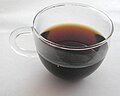 Pu'er tea
 -
 Pu'er tea
 -
 Pu'er tea
 -
 Pu'er tea
 -
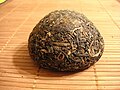 Pu'er tea
 -
 Pu'er tea
 -
 Pu'er tea
 -
 Pu'er tea
 -
 Pu'er tea
 -
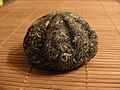 Pu'er tea


.jpg)


