Geothermal power: Difference between revisions
CSV import Tags: mobile edit mobile web edit |
CSV import |
||
| Line 24: | Line 24: | ||
[[Category:Power generation]] | [[Category:Power generation]] | ||
{{Energy-stub}} | {{Energy-stub}} | ||
<gallery> | |||
File:Top_5_Geothermal-Electric_Countries.png|Top 5 Geothermal-Electric Countries | |||
File:geothermal_capacity.svg|Geothermal Capacity | |||
File:EGS_diagram.svg|EGS Diagram | |||
File:Installed_geothermal_energy_capacity.png|Installed Geothermal Energy Capacity | |||
File:Staufen.Cracks.jpg|Staufen Cracks | |||
File:Puhagan_geothermal_plant.jpg|Puhagan Geothermal Plant | |||
File:Central_Geotérmica_de_Berlín_05.JPG|Central Geotérmica de Berlín | |||
File:World_geo_generation_yearly.png|World Geothermal Generation Yearly | |||
File:World_geothermal_generation_2021.png|World Geothermal Generation 2021 | |||
File:NesjavellirPowerPlant_edit2.jpg|Nesjavellir Power Plant | |||
</gallery> | |||
Latest revision as of 12:24, 18 February 2025
Geothermal power is a form of renewable energy that harnesses the natural heat energy stored within the earth. This heat energy, which is generated by the decay of radioactive elements within the earth's core, can be used to generate electricity or provide heating and cooling for buildings.
History[edit]
The use of geothermal energy dates back to ancient times, when people used hot springs for bathing and cooking. The first industrial use of geothermal energy occurred in the late 19th century, when a company in Italy used steam from a natural vent to generate electricity. Today, geothermal power plants are in operation in over 20 countries around the world.
Geothermal Resources[edit]
Geothermal resources can be classified into three main types: hydrothermal, geopressurized, and hot dry rock. Hydrothermal resources, which are the most commonly used, consist of hot water or steam trapped in porous rock. Geopressurized resources consist of hot water and natural gas under high pressure, while hot dry rock resources consist of hot, non-porous rock.
Power Generation[edit]
Geothermal power plants use heat from the earth to generate electricity in one of three ways: dry steam, flash steam, or binary cycle. Dry steam plants use steam directly from a geothermal reservoir to turn a turbine and generate electricity. Flash steam plants use high-pressure hot water to produce steam, which is then used to generate electricity. Binary cycle plants use a secondary fluid with a lower boiling point than water to generate steam, which is then used to turn a turbine.
Environmental Impact[edit]
While geothermal power is a renewable and sustainable form of energy, it does have some environmental impacts. These include the release of greenhouse gases, the potential for ground subsidence, and the disposal of geothermal fluids, which can contain low levels of toxic materials.
Future of Geothermal Power[edit]
The future of geothermal power looks promising, with advances in technology making it possible to access deeper and hotter geothermal resources. In addition, the use of enhanced geothermal systems (EGS), which involve the artificial creation of geothermal reservoirs, could significantly increase the amount of geothermal power that can be generated.
-
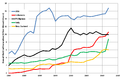 Top 5 Geothermal-Electric Countries
 -
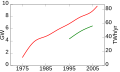 Geothermal Capacity
 -
 EGS Diagram
 -
 Installed Geothermal Energy Capacity
 -
Staufen Cracks
-
Puhagan Geothermal Plant
-
Central Geotérmica de Berlín
-
World Geothermal Generation Yearly
-
World Geothermal Generation 2021
-
Nesjavellir Power Plant


