Actinopterygii: Difference between revisions
CSV import |
CSV import Tags: mobile edit mobile web edit |
||
| Line 54: | Line 54: | ||
[[Category:Actinopterygii]] | [[Category:Actinopterygii]] | ||
[[Category:Fish]] | [[Category:Fish]] | ||
<gallery> | |||
File:Actinopterygii.jpg|Actinopterygii | |||
File:Anatomia_dei_pesci.jpg|Anatomia dei pesci | |||
File:Bluefin-big.jpg|Bluefin | |||
File:Swordfish_(Duane_Raver).png|Swordfish | |||
File:Salmo_salar.jpg|Salmo salar | |||
File:Atlantic_cod.jpg|Atlantic cod | |||
File:Ancylopsetta_dilecta_2.jpg|Ancylopsetta dilecta | |||
File:Anableps_anableps2.jpg|Anableps anableps | |||
File:Diaphus_metopoclampus.jpg|Diaphus metopoclampus | |||
File:Gonostoma_elongatum.jpg|Gonostoma elongatum | |||
File:Anoplogaster_cornuta_2.jpg|Anoplogaster cornuta | |||
File:Melanocetus_johnsonii.jpg|Melanocetus johnsonii | |||
</gallery> | |||
== Actinopterygii == | |||
<gallery> | <gallery> | ||
File:Actinopterygii.jpg|Actinopterygii | File:Actinopterygii.jpg|Actinopterygii | ||
Latest revision as of 12:24, 18 February 2025
Actinopterygii[edit]

Actinopterygii, also known as ray-finned fishes, are a class of bony fishes that constitute the largest class of vertebrates in existence today. They are characterized by the presence of lepidotrichia, or "fin rays," which are bony spines that support their fins. This group includes over 30,000 species, making it the most diverse class of vertebrates.
Anatomy[edit]

The anatomy of actinopterygian fishes is highly varied, reflecting their diverse lifestyles and habitats. However, they share some common features:
- Skeleton: Actinopterygians have a bony skeleton, which is lighter and more flexible than the cartilaginous skeletons of cartilaginous fishes.
- Fins: Their fins are supported by bony or cartilaginous spines known as rays.
- Scales: Most have scales that cover their bodies, which can be ganoid, cycloid, or ctenoid.
- Swim bladder: Many have a swim bladder, an internal gas-filled organ that helps them maintain buoyancy.
Evolution[edit]
Actinopterygii have a long evolutionary history, with fossils dating back to the late Silurian period. They have undergone significant diversification, leading to the wide variety of forms seen today. The group is divided into two subclasses: Chondrostei and Neopterygii.
Diversity[edit]
Actinopterygii are found in a wide range of aquatic environments, from deep oceans to freshwater rivers and lakes. They exhibit a vast array of adaptations that allow them to thrive in different ecological niches.
Notable Species[edit]

Bluefin tuna 
Swordfish 
Atlantic salmon 
Atlantic cod

.png)


Ecology[edit]
Actinopterygii play crucial roles in aquatic ecosystems. They are primary consumers, predators, and prey, forming essential links in food webs. Many species are also important to humans for food, recreation, and economic purposes.
Related Pages[edit]
Gallery[edit]
-
 Ancylopsetta dilecta
 -
 Anableps anableps
 -
 Diaphus metopoclampus
 -
 Gonostoma elongatum
 -
 Anoplogaster cornuta


-
 Actinopterygii
 -
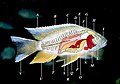 Anatomia dei pesci
 -
 Bluefin
 -
 Swordfish
 -
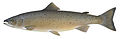 Salmo salar
 -
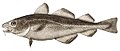 Atlantic cod
 -
Ancylopsetta dilecta
-
Anableps anableps
-
Diaphus metopoclampus
-
Gonostoma elongatum
-
Anoplogaster cornuta
-
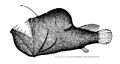 Melanocetus johnsonii

Actinopterygii[edit]
-
Actinopterygii
-
Anatomia dei pesci
-
Bluefin
-
Swordfish
-
Salmo salar
-
Atlantic cod
-
Ancylopsetta dilecta
-
Anableps anableps
-
Diaphus metopoclampus
-
Gonostoma elongatum
-
Anoplogaster cornuta
-
Melanocetus johnsonii
