New York metropolitan area: Difference between revisions
CSV import |
CSV import |
||
| Line 33: | Line 33: | ||
{{US-geo-stub}} | {{US-geo-stub}} | ||
<gallery> | |||
File:Luchtfoto_van_Lower_Manhattan.jpg|New York metropolitan area | |||
File:Montauk_Point_Lighthouse.jpg|New York metropolitan area | |||
File:New_York_Power_Authority_and_Main_Street_in_White_Plains.JPG|New York metropolitan area | |||
File:Paramount_Theatre_Asbury_Park_Convention_Hall_NJ2.jpg|New York metropolitan area | |||
File:Greenwich_Municipal_Center_Historic_District,_Connecticut.jpg|New York metropolitan area | |||
File:The_New_York_City_Skyline_at_Dusk.jpg|New York metropolitan area | |||
File:New_York_City,_Southern_RI_and_CT,_illuminated_at_night.jpg|New York metropolitan area | |||
File:Palisades_cliff.jpg|New York metropolitan area | |||
File:New_York_City_and_the_Long_Island.jpg|New York metropolitan area | |||
File:New_York_Combined_Metro_Area.png|New York metropolitan area | |||
File:High_Point_Monument_and_Lake_Marcia_framed.jpg|New York metropolitan area | |||
File:Pineapple_-_Garden_City_NY.jpg|New York metropolitan area | |||
</gallery> | |||
<gallery> | <gallery> | ||
File:Luchtfoto_van_Lower_Manhattan.jpg|New York metropolitan area | File:Luchtfoto_van_Lower_Manhattan.jpg|New York metropolitan area | ||
Revision as of 12:24, 18 February 2025
New York Metropolitan Area
The New York Metropolitan Area, also known as the New York City Metropolitan Area, NYC Metro Area, or simply the Metro Area, encompasses the most populous city in the United States, New York City, and its surrounding New Jersey, Connecticut, and New York regions. It is one of the world's largest and most significant urban agglomerations, both in terms of economy and population. The area includes the major cities and districts of New York City, Newark, Jersey City, Yonkers, and Stamford among others, making it a central hub for finance, culture, and transportation.
Geography
The New York Metropolitan Area spans three states: New York, New Jersey, and Connecticut, covering a large area with diverse geography ranging from urban cityscapes to suburban towns and rural areas. The core of the metropolitan area is New York City, which is divided into five boroughs: Manhattan, Brooklyn, Queens, The Bronx, and Staten Island.
Demographics
As of the latest census, the New York Metropolitan Area is home to over 20 million people, making it the largest metropolitan area in the United States by population. The area is incredibly diverse, with a significant portion of the population being immigrants or first-generation Americans. This diversity is reflected in the myriad of cultural, linguistic, and culinary traditions found throughout the region.
Economy
The economy of the New York Metropolitan Area is one of the largest and most complex in the world, with a gross metropolitan product (GMP) rivaling that of entire countries. It is a global hub for finance, with Wall Street in Lower Manhattan serving as the heart of the American financial industry. Other key sectors include media, technology, healthcare, and international trade. The presence of the United Nations Headquarters also underscores the area's importance in global diplomacy and international relations.
Transportation
The New York Metropolitan Area boasts an extensive and complex transportation network, including the largest subway system in the world by number of stations, the New York City Subway. Other components of the region's transportation infrastructure include major airports such as John F. Kennedy International Airport, LaGuardia Airport, and Newark Liberty International Airport, as well as a comprehensive network of bridges, tunnels, and ferries that facilitate movement within the area.
Culture and Recreation
The metropolitan area is a global center for culture, hosting numerous museums, galleries, theaters, and concert halls. Broadway, located in Manhattan, is synonymous with American theater. The area is also home to many parks and recreational areas, such as Central Park in Manhattan and the Hudson River Park. The diversity of the population contributes to a rich cultural tapestry, with numerous ethnic neighborhoods and communities throughout the region.
Education
The New York Metropolitan Area is home to many prestigious universities and colleges, including Columbia University, New York University, and Princeton University. These institutions contribute to the area's vibrant intellectual and cultural life, and attract students from around the globe.
Challenges
Despite its many strengths, the New York Metropolitan Area faces several challenges, including high living costs, income inequality, and the ongoing need for infrastructure improvements. The area is also vulnerable to the impacts of climate change, such as rising sea levels and extreme weather events.
Conclusion
The New York Metropolitan Area is a vibrant and dynamic region that plays a critical role in the global economy, culture, and politics. Its diversity, economic power, and cultural significance make it a key player on the world stage, despite the challenges it faces.

-
 New York metropolitan area
 -
 New York metropolitan area
 -
 New York metropolitan area
 -
 New York metropolitan area
 -
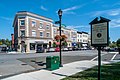 New York metropolitan area
 -
 New York metropolitan area
 -
 New York metropolitan area
 -
 New York metropolitan area
 -
 New York metropolitan area
 -
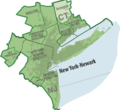 New York metropolitan area
 -
 New York metropolitan area
 -
 New York metropolitan area


-
New York metropolitan area
-
New York metropolitan area
-
New York metropolitan area
-
New York metropolitan area
-
New York metropolitan area
-
New York metropolitan area
-
New York metropolitan area
-
New York metropolitan area
-
New York metropolitan area
-
New York metropolitan area
-
New York metropolitan area
-
New York metropolitan area
