Goat cheese: Difference between revisions
CSV import |
CSV import |
||
| Line 28: | Line 28: | ||
{{Medicine-stub}} | {{Medicine-stub}} | ||
{{Herb-stub}} | {{Herb-stub}} | ||
<gallery> | |||
File:Plateau_3_horizontal.tif|Goat cheese | |||
File:Ziegenkaese_Rolle_II.jpg|Goat cheese | |||
File:Kesong_puti.jpg|Goat cheese | |||
File:Yehegnadzor.jpg|Goat cheese | |||
File:White_Brine_cheese_cubes.jpg|Goat cheese | |||
File:Purple_haze_chevre.jpg|Goat cheese | |||
File:Ricotta.jpeg|Goat cheese | |||
File:Malta_Gbejniet.JPG|Goat cheese | |||
File:Otlu_tulum_peyniri.jpg|Goat cheese | |||
File:Aged_Bessarabian_bryndza.jpg|Goat cheese | |||
File:Chleb_z_bryndza.jpg|Goat cheese | |||
File:Cheese_30_bg_051906.jpg|Goat cheese | |||
</gallery> | |||
Revision as of 12:23, 18 February 2025
Goa Powder is a traditional Chinese medicine used for its therapeutic properties. It is also known as Gallnut of Chinese Sumac or Galla Chinensis, and is derived from the gall of Rhus chinensis, an Asian species of sumac.
Origin and Production
Goa Powder originates from the reaction of the sumac plant to the gall aphid (Melaphis chinensis). The aphid lays its eggs on the plant, causing a chemical reaction that results in the formation of a gall. The gall is harvested and ground into a fine powder, which is then used in various medicinal applications.
Medicinal Uses
In traditional Chinese medicine, Goa Powder is used to treat a variety of ailments. It is known for its astringent, antidiarrheal, and antihemorrhagic properties. It is often used to treat conditions such as diarrhea, dysentery, cough, and ulcers. It is also used in the treatment of oral ulcers and tooth decay due to its antibacterial and anti-inflammatory properties.
Pharmacological Properties
The therapeutic properties of Goa Powder are attributed to its rich content of tannins. Tannins are polyphenolic compounds that have astringent properties, which can help to tighten the skin and mucous membranes, reduce inflammation, and stop bleeding. The powder also contains small amounts of gallic acid and ellagic acid, which have been shown to have antimicrobial and antioxidant properties, respectively.
Preparation and Dosage
Goa Powder is typically prepared as a decoction, with the powder being boiled in water for a certain period of time. The resulting liquid is then strained and consumed. The recommended dosage varies depending on the condition being treated, but it is generally advised to consult with a healthcare professional before starting any new treatment regimen.
Safety and Side Effects
While Goa Powder is generally considered safe for use, it can cause side effects in some individuals, particularly when consumed in large amounts. These can include stomach upset, nausea, and constipation. It is also not recommended for use during pregnancy or breastfeeding without medical supervision.
See Also


-
 Goat cheese
 -
 Goat cheese
 -
 Goat cheese
 -
 Goat cheese
 -
 Goat cheese
 -
 Goat cheese
 -
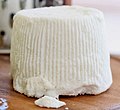 Goat cheese
 -
 Goat cheese
 -
 Goat cheese
 -
 Goat cheese
 -
 Goat cheese
 -
 Goat cheese


