Physiology of underwater diving: Difference between revisions
CSV import |
CSV import |
||
| Line 44: | Line 44: | ||
{{Medicine-stub}} | {{Medicine-stub}} | ||
<gallery> | |||
File:Europäischer_Seehund.jpg|Physiology of underwater diving | |||
File:Mirounga_leonina_male.JPG|Physiology of underwater diving | |||
File:Sea_lion_family.JPG|Physiology of underwater diving | |||
File:Ohrenrobbe_vor_der_Küste_Namibias.jpg|Physiology of underwater diving | |||
File:Walruses_on_waves.jpg|Physiology of underwater diving | |||
File:Mother_and_baby_sperm_whale.jpg|Physiology of underwater diving | |||
File:Anim1087_-_Flickr_-_NOAA_Photo_Library.jpg|Physiology of underwater diving | |||
File:Whales_Bubble_Net_Feeding-edit1.jpg|Physiology of underwater diving | |||
File:Sea_otter_(19631833733).jpg|Physiology of underwater diving | |||
File:Polar_bear_arctic.JPG|Physiology of underwater diving | |||
File:Pygoscelis_papua_-Nagasaki_Penguin_Aquarium_-swimming_underwater-8a.jpg|Physiology of underwater diving | |||
File:Hesperornis_regalis_(1).jpg|Physiology of underwater diving | |||
</gallery> | |||
Revision as of 12:20, 18 February 2025
Physiology of Underwater Diving
The physiology of underwater diving is the study of the effects of the underwater environment on the human body. The primary physiological challenges are due to the increased pressure at depth, the need to breathe gas at this pressure, and the effects of breathing gas under pressure. Understanding these effects is crucial for the safety and efficiency of divers.
Effects of Increased Pressure
Underwater, divers are subjected to increased ambient pressure, which increases linearly with depth. This has several physiological implications:
Barotrauma
Barotrauma occurs when the pressure inside an air-filled space in the body does not equal the ambient pressure. Common sites for barotrauma include the ears, sinuses, and lungs. Divers must equalize the pressure in these spaces with the surrounding water pressure to avoid injury.
Nitrogen Narcosis
At depth, the partial pressure of nitrogen in the breathing gas can cause a narcotic effect, known as nitrogen narcosis. This effect is similar to intoxication and can impair judgment and motor skills.
Oxygen Toxicity
Breathing oxygen at high partial pressures can lead to oxygen toxicity, which can damage the lungs and central nervous system. This risk limits the depth and duration of dives.
Breathing Gas at Depth
The increased pressure at depth affects the gases divers breathe:
Gas Absorption and Decompression Sickness
Under pressure, the body absorbs more gas into its tissues. If the pressure decreases too quickly during ascent, the gas can form bubbles in the body, leading to decompression sickness (DCS). Divers must ascend slowly and may need to perform decompression stops to allow safe gas elimination.
Breathing Work
Breathing gas at increased pressure requires more effort due to its increased density. This can lead to fatigue and increases the risk of hypercapnia (excess carbon dioxide in the blood).
Thermal Considerations
Water conducts heat away from the body much more efficiently than air. Divers can lose body heat rapidly, leading to hypothermia. Insulating diving suits are used to mitigate this risk.
Adaptations to Underwater Environment
Divers can undergo physiological adaptations to improve their underwater performance:
Mammalian Diving Reflex
The Mammalian Diving Reflex is a set of reflexes activated by immersion in water and holding one's breath. It optimizes respiration to allow staying underwater for extended periods.
Blood Shift
During deep freedives, the body will shunt blood from the extremities to the chest, protecting the organs from the increased pressure and facilitating oxygen transport.
Conclusion
The physiology of underwater diving encompasses a wide range of responses and adaptations to the underwater environment. Understanding these physiological principles is essential for safe and effective diving practices.

-
 Physiology of underwater diving
 -
 Physiology of underwater diving
 -
 Physiology of underwater diving
 -
 Physiology of underwater diving
 -
 Physiology of underwater diving
 -
 Physiology of underwater diving
 -
 Physiology of underwater diving
 -
 Physiology of underwater diving
 -
 Physiology of underwater diving
 -
 Physiology of underwater diving
 -
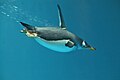 Physiology of underwater diving
 -
 Physiology of underwater diving


.jpg)


.jpg)
