Laurasiatheria: Difference between revisions
CSV import Tags: mobile edit mobile web edit |
CSV import Tags: mobile edit mobile web edit |
||
| Line 24: | Line 24: | ||
[[Category:Laurasiatheria]] | [[Category:Laurasiatheria]] | ||
{{biology-stub}} | {{biology-stub}} | ||
<gallery> | |||
File:OrthoMaM_v10b_2019_116genera_circular_tree.svg|Laurasiatheria | |||
File:Wortmania_otariidens_recon_1.png|Laurasiatheria | |||
File:Elephas_africanus_-_1700-1880_-_Print_-_Iconographia_Zoologica_-_(white_background).jpg|Laurasiatheria | |||
File:Bruno_Liljefors_-_Hare_studies_1885_white_background.jpg|Laurasiatheria | |||
File:Erinaceus_europaeus_-_1700-1880_-_Print_-_Iconographia_Zoologica_-_Special_Collections_University_of_Amsterdam_-(white_background).jpg|Laurasiatheria | |||
File:Braunes_Langohr_(Plectus_auritus).jpg|Laurasiatheria | |||
File:Dogs,_jackals,_wolves,_and_foxes_(Plate_XI).jpg|Laurasiatheria | |||
</gallery> | |||
Latest revision as of 12:19, 18 February 2025

Laurasiatheria is a superorder of mammals that originated on the supercontinent Laurasia after it split from the supercontinent Gondwana during the breakup of Pangaea. Laurasiatheria includes a diverse group of mammals, ranging from bats to carnivores, and is distinguished by certain genetic and morphological characteristics. This superorder is one of the major groups within the clade Theria, the subclass of mammals that includes all living placental mammals, marsupials, and their extinct relatives.
Classification[edit]
Laurasiatheria is divided into several orders, which include some of the most well-known and studied mammals. The primary orders within Laurasiatheria are:
- Eulipotyphla – includes small insectivorous mammals like hedgehogs, moles, and shrews.
- Chiroptera – comprises all bats, which are the only mammals capable of true flight.
- Carnivora – includes both feliforms (cats, hyenas, etc.) and caniforms (dogs, bears, etc.), characterized by their carnivorous or omnivorous diets.
- Perissodactyla – odd-toed ungulates, including horses, rhinoceroses, and tapirs.
- Artiodactyla – even-toed ungulates, which includes a wide variety of herbivorous mammals such as deer, cattle, and pigs. This order also includes the Cetacea (whales, dolphins, and porpoises) as a result of molecular studies showing their descent from artiodactyl ancestors.
- Pholidota – consists of the pangolins, unique scaled mammals that feed on ants and termites.
Evolution[edit]
The Laurasiatheria clade is believed to have diverged from the other mammals of the superorder Euarchontoglires around 85 to 95 million years ago, in the Late Cretaceous period. This divergence was part of the broader mammalian radiation that occurred after the extinction of the non-avian dinosaurs, allowing mammals to occupy a wide range of ecological niches and undergo significant diversification. The name "Laurasiatheria" reflects the hypothesis that these mammals originated on the ancient northern supercontinent of Laurasia. Molecular and fossil evidence supports the monophyly of Laurasiatheria, indicating a common ancestor for this diverse group of mammals.
Characteristics[edit]
Members of the Laurasiatheria share certain genetic markers that support their common ancestry. Morphologically, there is a wide variety among the included orders, reflecting the diverse ecological roles they have evolved to fill. From the echolocation of bats to the specialized digestive systems of ruminants in the Artiodactyla, Laurasiatheria demonstrates a wide range of adaptations.
Conservation[edit]
Many species within the Laurasiatheria face threats from habitat loss, hunting, and climate change. Conservation efforts are critical to protect these diverse mammalian groups, with strategies including habitat preservation, legal protection, and breeding programs for endangered species.
See also[edit]

-
 Laurasiatheria
 -
 Laurasiatheria
 -
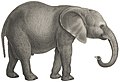 Laurasiatheria
 -
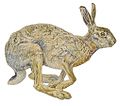 Laurasiatheria
 -
 Laurasiatheria
 -
 Laurasiatheria
 -
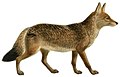 Laurasiatheria


.jpg)

.jpg)
.jpg)
.jpg)
