Cabbage roll: Difference between revisions
CSV import |
CSV import Tags: mobile edit mobile web edit |
||
| Line 24: | Line 24: | ||
[[Category:Middle Eastern cuisine]] | [[Category:Middle Eastern cuisine]] | ||
{{food-stub}} | {{food-stub}} | ||
<gallery> | |||
File:02022_Hungarian_stuffed_cabbage_rolls_in_pickled_cabbage_leaves_with_veal_and_deer_meat.jpg|Cabbage roll | |||
File:Kalam_dolmasi_Azerbaijan.jpg|Cabbage roll | |||
File:Töltött_káposzta,_2.jpg|Cabbage roll | |||
File:00101_Rindfleisch_-_Kohlroulade,_Podkarpackie.JPG|Cabbage roll | |||
File:Golubtci_025.jpg|Cabbage roll | |||
File:Golubci8.jpg|Cabbage roll | |||
File:כרוב_ממולא.jpg|Cabbage roll | |||
File:Kåldolmar.jpg|Cabbage roll | |||
File:Wirsingroulade.jpg|Cabbage roll | |||
File:Mahshi_koromb.jpg|Cabbage roll | |||
File:Stuffed_Cabbage_Golomki.jpg|Cabbage roll | |||
</gallery> | |||
Latest revision as of 12:17, 18 February 2025
Cabbage roll is a dish made from cooked cabbage leaves wrapped around a variety of fillings. It is common to the ethnic cuisines of the Balkans, Central Europe, Eastern Europe and the Middle East.
History[edit]
The origins of the cabbage roll are unclear, but it is likely that they were first made in Eastern Europe and the Middle East, where cabbage is a staple food. The dish has since spread to other parts of the world, including North America, where it is often associated with Eastern European immigrant communities.
Preparation[edit]
To prepare cabbage rolls, individual leaves of a head of cabbage are boiled or steamed until they are flexible enough to be rolled. The filling typically consists of ground meat (such as beef, lamb, or pork), rice, onions, and various spices, although vegetarian versions are also common. The filled cabbage leaves are then rolled into a cylindrical shape and baked, simmered, or steamed until the filling is cooked and the flavors have melded together.
Variations[edit]
There are many regional variations of cabbage rolls. In the Middle East, they are often served with a sauce made from lemon juice and garlic, while in Eastern Europe, they are typically served with a tomato-based sauce. Some versions also include other ingredients in the filling, such as mushrooms, carrots, or bacon.
Cultural significance[edit]
Cabbage rolls are often associated with holidays and special occasions in many cultures. For example, in Poland, they are traditionally served on Christmas Eve, while in Jewish cuisine, they are a common dish for Sukkot.
See also[edit]

-
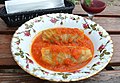 Cabbage roll
 -
 Cabbage roll
 -
 Cabbage roll
 -
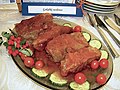 Cabbage roll
 -
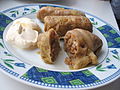 Cabbage roll
 -
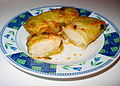 Cabbage roll
 -
 Cabbage roll
 -
 Cabbage roll
 -
 Cabbage roll
 -
 Cabbage roll
 -
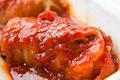 Cabbage roll


