Incest: Difference between revisions
CSV import Tags: mobile edit mobile web edit |
CSV import Tags: mobile edit mobile web edit |
||
| Line 35: | Line 35: | ||
{{Sociology-stub}} | {{Sociology-stub}} | ||
{{Biology-stub}} | {{Biology-stub}} | ||
<gallery> | |||
File:Woodcut_illustration_of_Semiramis_and_her_son_Ninias_-_Penn_Provenance_Project.jpg|Semiramis and her son Ninias | |||
File:Table_of_Consanguinity_showing_degrees_of_relationship.svg|Table of Consanguinity | |||
File:Tutankhamun_and_his_wife_B._C._1330.jpg|Tutankhamun and his wife | |||
File:Yaxchilán_lintel.jpg|Yaxchilán lintel | |||
File:W.Clerke_table.PNG|W. Clerke table | |||
File:Rey_Carlos_II.jpg|Rey Carlos II | |||
File:Incest_World_Wide_Chart_(Borysk5_orig_amended_by_Tyir86_with_title,_legend,_bkrd_color).png|Incest World Wide Chart | |||
File:Cousin_marriage_map1.svg|Cousin marriage map | |||
File:Fruit_flies_mating.jpg|Fruit flies mating | |||
</gallery> | |||
Latest revision as of 12:10, 18 February 2025
Incest is a term used to describe sexual activity or marriage between individuals who are closely related by blood. The definition of what constitutes incest varies across different cultures, legal systems, and contexts, but it generally involves sexual relations between close relatives.
Definition[edit]
Incest is most commonly defined as sexual activity between individuals who are closely related by blood. This typically includes relationships between parents and children, siblings, and in some cases, between extended family members such as uncles, aunts, nieces, and nephews. Some definitions of incest also include relationships between individuals related by adoption or marriage, such as step-parents and step-children or in-laws.
Cultural and Legal Perspectives[edit]
Cultural and legal perspectives on incest vary widely across different societies and legal systems. In many cultures, incest is considered a taboo and is strictly prohibited. This is often due to social, religious, or moral reasons. In some societies, however, certain forms of incestuous relationships may be accepted or even encouraged under specific circumstances.
In legal terms, incest is considered a crime in many jurisdictions. The severity of the punishment for incest varies, ranging from fines and imprisonment to the death penalty in some countries. In some jurisdictions, the definition of incest also includes consensual sexual relationships between adults who are closely related.
Psychological and Sociological Aspects[edit]
From a psychological perspective, incest is often associated with harm and trauma, particularly in cases where it involves coercion or abuse. It can have severe psychological effects on the victims, including depression, anxiety, post-traumatic stress disorder (PTSD), and other mental health issues.
From a sociological perspective, incest is often seen as a violation of social norms and family roles. It can disrupt family structures and relationships, and can lead to social stigma and ostracism.
Biological Aspects[edit]
From a biological perspective, incest can lead to an increased risk of genetic disorders due to the increased probability of inheriting recessive genes. This is known as inbreeding depression.
See Also[edit]
.svg) | This sexuality-related article is a stub. You can help Wikipedia by adding missing information. |
 | This crime-related article is a stub. You can help Wikipedia by adding missing information. |
 | This psychology-related article is a stub. You can help Wikipedia by adding missing information. |
 | This sociology-related article is a stub. You can help Wikipedia by adding missing information. |

-
 Semiramis and her son Ninias
 -
 Table of Consanguinity
 -
 Tutankhamun and his wife
 -
 Yaxchilán lintel
 -
 W. Clerke table
 -
 Rey Carlos II
 -
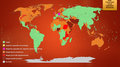 Incest World Wide Chart
 -
 Cousin marriage map
 -
 Fruit flies mating


.png)


