Valpolicella: Difference between revisions
CSV import |
CSV import Tags: mobile edit mobile web edit |
||
| Line 46: | Line 46: | ||
[[Category:Wine regions of Italy]] | [[Category:Wine regions of Italy]] | ||
[[Category:Province of Verona]] | [[Category:Province of Verona]] | ||
<gallery> | |||
File:Vineyards_in_Valpolicella.jpg|Vineyards in Valpolicella | |||
File:Map_Province_of_Verona.svg|Map of Province of Verona | |||
File:Front_and_back_label_of_Amarone_della_Valpolicella.jpg|Front and back label of Amarone della Valpolicella | |||
File:Late_Sept_Valpolicella_vineyard.jpg|Late September Valpolicella vineyard | |||
File:Bottle_and_partial_glass_of_Valpolicella.jpg|Bottle and partial glass of Valpolicella | |||
File:Grapes_growing_in_Valpolicella.jpg|Grapes growing in Valpolicella | |||
File:View_Castelrotto_to_Pedemonte_Arbizzano_Montericco_hill-olea_europaea-varietal_corvina_corvinone_rondinella_molinara_dindarella_oseleta_croatina-april_2014-photo_for_Mamme_della_Valpolicella-by_Paolo_Villa.jpg|View from Castelrotto to Pedemonte | |||
File:Ripasso_valpolicella.jpg|Ripasso Valpolicella | |||
File:Pasta_with_Pork_and_Amarone_and_Eggplant_Parmesean.jpg|Pasta with Pork and Amarone and Eggplant Parmesan | |||
File:1974_Bolla_Amarone.jpg|1974 Bolla Amarone | |||
</gallery> | |||
Revision as of 12:08, 18 February 2025
Valpolicella
Valpolicella is a renowned wine-producing region located in the Province of Verona, in the Veneto region of Italy. The area is famous for its red wines, particularly Amarone della Valpolicella, which is made using a unique process of drying grapes before fermentation.
Geography
Valpolicella is situated to the north of Verona and extends from the Adige River to the foothills of the Lessini Mountains. The region is characterized by its rolling hills and fertile valleys, which provide an ideal environment for viticulture. The climate is generally mild, with warm summers and cool winters, influenced by the nearby Lake Garda.
History
The history of winemaking in Valpolicella dates back to ancient times, with evidence of viticulture in the area during the Roman Empire. The name "Valpolicella" is believed to derive from the Latin "Vallis-polis-cellae," meaning "valley of many cellars," reflecting its long-standing tradition of wine production.
Wine Production
Valpolicella wines are primarily made from indigenous grape varieties such as Corvina, Rondinella, and Molinara. The region is known for several styles of wine:
- Valpolicella Classico: A light, fruity red wine that is typically consumed young.
- Valpolicella Superiore: A more robust version that is aged for at least one year.
- Amarone della Valpolicella: A rich, full-bodied wine made from partially dried grapes, resulting in a higher alcohol content and complex flavors.
- Recioto della Valpolicella: A sweet dessert wine made from dried grapes.
- Ripasso della Valpolicella: A wine that undergoes a second fermentation with the addition of Amarone grape skins, enhancing its body and flavor.
Economy
The wine industry is a significant part of the local economy, with numerous wineries and vineyards contributing to the region's prosperity. Valpolicella wines are exported worldwide, and the area attracts tourists interested in wine tasting and vineyard tours.
Related Pages
References
- "Valpolicella." Oxford Companion to Wine, 4th ed., edited by Jancis Robinson, Oxford University Press, 2015.
- "Valpolicella." Wine Spectator, www.winespectator.com.
Gallery
-
 Vineyards in Valpolicella
 -
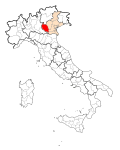 Map of the Province of Verona
 -
 Amarone della Valpolicella labels
 -
 Valpolicella vineyard in late September
 -
 Bottle and glass of Valpolicella
 -
 Grapes growing in Valpolicella
 -
 View from Castelrotto to Pedemonte
 -
 Ripasso Valpolicella
 -
 Pasta with pork and Amarone
 -
 1974 Bolla Amarone


-
Vineyards in Valpolicella
-
Map of Province of Verona
-
Front and back label of Amarone della Valpolicella
-
Late September Valpolicella vineyard
-
Bottle and partial glass of Valpolicella
-
Grapes growing in Valpolicella
-
View from Castelrotto to Pedemonte
-
Ripasso Valpolicella
-
Pasta with Pork and Amarone and Eggplant Parmesan
-
1974 Bolla Amarone
