Pickling: Difference between revisions
CSV import |
CSV import |
||
| Line 26: | Line 26: | ||
[[Category:Fermented foods]] | [[Category:Fermented foods]] | ||
{{food-stub}} | {{food-stub}} | ||
<gallery> | |||
File:Gherkins_and_Onions.JPG|Pickling | |||
File:Indian_cultural_zone.svg|Pickling | |||
File:Indian-pickle.jpg|Pickling | |||
File:Dưa_cải_muối.JPG|Pickling | |||
File:Gimchi.jpg|Pickling | |||
File:Tursucu_Sahne_sokak_beyoglu_Istanbul_0644.jpg|Pickling | |||
File:PikiWiki_Israel_39626_Cities_in_Israel.JPG|Pickling | |||
File:Coriander_Seed.jpg|Pickling | |||
File:Jonjoli.jpg|Pickling | |||
File:Pomidor_turshusu_e-citizen.jpg|Pickling | |||
File:GiardinieraSpicy.JPG|Pickling | |||
File:Vase_by_Bat_Trang_ceramic_for_pickling_2.JPG|Pickling | |||
</gallery> | |||
Revision as of 12:08, 18 February 2025
Pickling is a method of food preservation that involves immersing the food in an acid solution, usually vinegar (acetic acid), in order to prevent spoilage. The process can also involve fermentation, where the acid is produced by bacteria. The resulting food is known as a pickle or, to prevent ambiguity, as pickled food.
History
The practice of pickling is ancient, dating back to 2400 BC in Mesopotamia. It was used as a way to preserve food for out-of-season use and for long journeys, especially by sea. Sea salt, and later brine, was used to pickle foods and improve their palatability.
Process
The pickling process typically involves three steps: preparation, pickling, and storage. The food is first cleaned and cut into the desired shape. The food is then immersed in a pickling solution, which is typically a mixture of vinegar, water, and sometimes sugar or salt. The food is left in the solution for a period of time, during which it absorbs the flavors of the solution and becomes acidic. Finally, the food is stored in a sealed container, often in the same solution in which it was pickled.
Types of Pickling
There are several types of pickling, including brine pickling, vinegar pickling, and fermentation pickling. Each type uses a different method and ingredients to achieve the desired taste and texture.
Health Benefits
Pickled foods can be a source of probiotics, which are beneficial bacteria that can improve digestive health. They are also typically low in calories, making them a healthy snack option.
Cultural Significance
Pickling has cultural significance in many cultures around the world. In Eastern Europe, pickled cucumbers and cabbage are common. In Asia, pickled foods like kimchi and pickled ginger are staples. In the United States, pickled cucumbers, often referred to simply as "pickles", are a popular snack.
See Also

-
 Pickling
 -
 Pickling
 -
 Pickling
 -
 Pickling
 -
 Pickling
 -
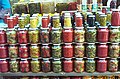 Pickling
 -
 Pickling
 -
 Pickling
 -
Pickling
-
Pickling
-
Pickling
-
Pickling


