Fabaceae: Difference between revisions
CSV import Tags: mobile edit mobile web edit |
CSV import |
||
| Line 29: | Line 29: | ||
{{Botany-stub}} | {{Botany-stub}} | ||
<gallery> | |||
File:Gymnocladus-dioicus.jpg|Fabaceae | |||
File:Wisteria_sinensis_anatomia_en.svg|Fabaceae | |||
File:Vicia_sepium10_ies.jpg|Fabaceae | |||
File:Cross-section_through_root_nodule_of_(Vicia_spec.).jpg|Fabaceae | |||
File:Indigo_plant_extract_sample.jpg|Fabaceae | |||
File:Erythrina_crista-galli_08_ies.jpg|Fabaceae | |||
File:MG_7005.jpg|Fabaceae | |||
File:Starr_050419-0368_Alysicarpus_vaginalis.jpg|Fabaceae | |||
File:CalliandraEmarginata.JPG|Fabaceae | |||
File:Cassia_leptophylla_tree.jpg|Fabaceae | |||
File:Desmodium_gangeticum_W2_IMG_2776.jpg|Fabaceae | |||
File:Sickle_Bush_(Dichrostachys_cinerea)_in_Hyderabad,_AP_W2_IMG_9903.jpg|Fabaceae | |||
</gallery> | |||
Latest revision as of 12:01, 18 February 2025
Fabaceae, also known as the legume, pea, or bean family, is a large and economically important family of flowering plants. It is the third-largest land plant family by number of species, with around 20,000 species classified into about 750 genera. The family is widely distributed, being found on all continents except Antarctica, and includes a variety of habitats ranging from forest to grassland. Members of the Fabaceae family are characterized by their fruit, typically a legume, a type of pod that splits into two pieces and contains seeds.
Characteristics[edit]
Fabaceae plants are most commonly herbaceous plants but also include trees and shrubs. They are easily recognized by their leaves, which are usually compound and arranged alternately along the stem. The flowers are often bilateral symmetrical and are typically hermaphroditic, containing both male and female reproductive organs. The family is notable for its ability to fix nitrogen, a process conducted by symbiotic bacteria within root nodules. This nitrogen fixation enriches the soil and reduces the need for artificial fertilizers, making Fabaceae species important in sustainable agriculture.
Classification[edit]
The Fabaceae family is divided into three subfamilies:
- Faboideae or Papilionoideae, the largest subfamily, includes well-known genera such as Pisum (peas), Medicago (alfalfa), and Trifolium (clover).
- Mimosoideae, known for genera like Acacia and Mimosa.
- Caesalpinioideae, which includes Cassia and Cercis (redbuds).
Economic Importance[edit]
Fabaceae species are of significant economic importance. Many are cultivated for their edible seeds (beans, peas, lentils), oils (soybean, peanut), and for forage (clover, alfalfa). Some species are used in timber production (e.g., Acacia, Dalbergia), and others have medicinal properties or are used in landscaping for their attractive flowers.
Ecological Role[edit]
Beyond their economic value, Fabaceae plants play a crucial ecological role. Their ability to fix nitrogen enhances soil fertility, making them key components in crop rotation and intercropping systems. They provide habitat and food for a variety of wildlife, including pollinators like bees, which are essential for the reproduction of many crops.
Conservation[edit]
While many Fabaceae species are widespread and common, some are threatened or endangered due to habitat loss, overexploitation, and climate change. Conservation efforts are essential to protect these species and maintain biodiversity.
See Also[edit]

-
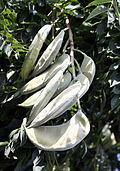 Fabaceae
 -
 Fabaceae
 -
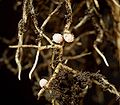 Fabaceae
 -
 Fabaceae
 -
 Fabaceae
 -
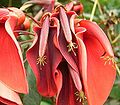 Fabaceae
 -
 Fabaceae
 -
 Fabaceae
 -
 Fabaceae
 -
 Fabaceae
 -
 Fabaceae
 -
 Fabaceae


.jpg)


_in_Hyderabad,_AP_W2_IMG_9903.jpg)
