Insect morphology: Difference between revisions
CSV import |
CSV import |
||
| Line 40: | Line 40: | ||
[[Category:Arthropod morphology]] | [[Category:Arthropod morphology]] | ||
{{Arthropod-stub}} | {{Arthropod-stub}} | ||
==Insect_morphology== | |||
<gallery> | |||
File:Insect_anatomy_diagram.svg|Insect morphology | |||
File:Grasshopper-head.jpg|Grasshopper head | |||
File:Fig-tree_borer_larva_Phryneta_spinator_2013_03_06_2275.JPG|Fig-tree borer larva | |||
File:Syrphidae_maggot.jpg|Syrphidae maggot | |||
File:Hypostomal_bridge_in_insect_diagram.svg|Hypostomal bridge in insect | |||
File:Insect_ocellus_diagram.svg|Insect ocellus diagram | |||
File:Insect_compound_eye_diagram.svg|Insect compound eye diagram | |||
File:Solenopsis_invicta_-_fire_ant_worker.jpg|Fire ant worker | |||
File:Insect-antenna_aristate.svg|Insect antenna aristate | |||
File:Insect-antenna_capitate.svg|Insect antenna capitate | |||
File:Insect-antenna_clavate.svg|Insect antenna clavate | |||
File:Insect-antenna_filiform.svg|Insect antenna filiform | |||
</gallery> | |||
Revision as of 11:59, 18 February 2025
Insect morphology refers to the physical form and structure, or morphology, of insects. The largest group within the animal kingdom, insects are characterized by their chitinous exoskeleton, three-part bodies, three pairs of jointed legs, compound eyes, and one pair of antennae.
Body Structure
Insects possess a highly diverse range of body structures that have evolved over millions of years. The insect body is divided into three main parts: the head, the thorax, and the abdomen.
Head
The insect head houses the brain, compound eyes, antennae, and mouthparts. The antennae are sensory organs, while the mouthparts can be adapted for biting, sucking, or lapping, depending on the insect's diet.
Thorax
The thorax is the locomotor center of the insect, housing the legs and wings. Insects are the only group of invertebrates to have developed flight, and their wings are a key aspect of their success.
Abdomen
The abdomen houses the digestive, excretory, and reproductive organs. It is typically the largest part of the insect and is divided into segments.
Exoskeleton
The exoskeleton of an insect is a protective casing made from a tough, flexible material called chitin. It provides support, protects the insect from physical harm, and prevents water loss.
Reproduction and Development
Insect reproduction typically involves internal fertilization and the laying of eggs. The development of the insect from egg to adult can follow one of two main pathways: complete metamorphosis or incomplete metamorphosis.
Adaptations
Insects have a range of adaptations that have allowed them to inhabit nearly every environment on Earth. These include adaptations for flight, feeding, reproduction, and survival in extreme conditions.
See Also

Insect_morphology
-
 Insect morphology
 -
 Grasshopper head
 -
 Fig-tree borer larva
 -
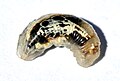 Syrphidae maggot
 -
 Hypostomal bridge in insect
 -
 Insect ocellus diagram
 -
 Insect compound eye diagram
 -
 Fire ant worker
 -
 Insect antenna aristate
 -
 Insect antenna capitate
 -
 Insect antenna clavate
 -
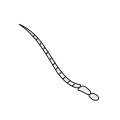 Insect antenna filiform


