Flexor pollicis brevis muscle: Difference between revisions
CSV import Tags: mobile edit mobile web edit |
CSV import |
||
| Line 26: | Line 26: | ||
[[Category:Hand]] | [[Category:Hand]] | ||
{{stub}} | {{stub}} | ||
<gallery> | |||
File:Musculusflexorpollicisbrevis.png|Flexor pollicis brevis muscle | |||
File:Braus_1921_215.png|Flexor pollicis brevis muscle | |||
File:Hand_dissection_9.jpg|Flexor pollicis brevis muscle | |||
File:Gray219.png|Flexor pollicis brevis muscle | |||
File:Gray415.png|Flexor pollicis brevis muscle | |||
File:Carpal-Tunnel.svg|Flexor pollicis brevis muscle | |||
File:Gray815.png|Flexor pollicis brevis muscle | |||
File:Gray817.png|Flexor pollicis brevis muscle | |||
File:Slide1yyy.JPG|Flexor pollicis brevis muscle | |||
File:Slide2VVV.JPG|Flexor pollicis brevis muscle | |||
File:Slide2AAAA.JPG|Flexor pollicis brevis muscle | |||
File:Slide7BBBB.JPG|Flexor pollicis brevis muscle | |||
</gallery> | |||
Latest revision as of 11:56, 18 February 2025
Flexor pollicis brevis muscle is a muscle in the hand that flexes the thumb. It is one of three thenar muscles. It has both a superficial part and a deep part.
Etymology[edit]
The term "flexor" comes from the Latin word "flectere", meaning "to bend". "Pollicis" is derived from the Latin word "pollex" which means "thumb". "Brevis" is Latin for "short".
Anatomy[edit]
The flexor pollicis brevis muscle is located in the thenar eminence, the fleshy mass at the base of the thumb. It is one of three thenar muscles, the others being the abductor pollicis brevis and the opponens pollicis.
The muscle has two heads: a superficial part and a deep part. The superficial part arises from the distal edge of the flexor retinaculum and the tubercle of the trapezium. The deep part originates from the trapezoid and capitate bones.
Function[edit]
The flexor pollicis brevis muscle, as its name suggests, flexes the thumb. It is innervated by the median nerve and the ulnar nerve.
Clinical significance[edit]
Damage to the flexor pollicis brevis muscle can result in a loss of thumb flexion. This can significantly impact hand function, as the thumb is essential for many tasks such as gripping objects.
See also[edit]
References[edit]
<references />
 | |
|---|---|
 |
 |
-
 Flexor pollicis brevis muscle
 -
 Flexor pollicis brevis muscle
 -
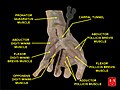 Flexor pollicis brevis muscle
 -
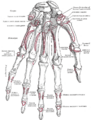 Flexor pollicis brevis muscle
 -
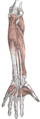 Flexor pollicis brevis muscle
 -
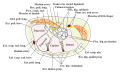 Flexor pollicis brevis muscle
 -
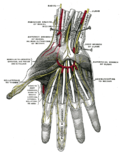 Flexor pollicis brevis muscle
 -
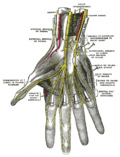 Flexor pollicis brevis muscle
 -
 Flexor pollicis brevis muscle
 -
 Flexor pollicis brevis muscle
 -
 Flexor pollicis brevis muscle
 -
 Flexor pollicis brevis muscle


