Labyrinth: Difference between revisions
CSV import Tags: mobile edit mobile web edit |
CSV import |
||
| Line 29: | Line 29: | ||
{{stub}} | {{stub}} | ||
<gallery> | |||
File:Knossos_silver_coin_400bc.jpg|Knossos silver coin from 400 BC | |||
File:Gaziantep_Zeugma_Museum_Daedalus_mosaic_1871.jpg|Daedalus mosaic at Gaziantep Zeugma Museum | |||
File:Edward_Burne-Jones_-_Tile_Design_-_Theseus_and_the_Minotaur_in_the_Labyrinth_-_Google_Art_Project.jpg|Theseus and the Minotaur in the Labyrinth by Edward Burne-Jones | |||
File:Halebid2.JPG|Labyrinth | |||
File:Classical_7-Circuit_Labyrinth.svg|Classical 7-Circuit Labyrinth | |||
File:Labyrinthus.svg|Labyrinthus | |||
File:Inneres_der_Kathedrale.jpg|Labyrinth | |||
File:Labyrinth.JPG|Labyrinth | |||
File:Labyrinth_at_Chartres_Cathedral.JPG|Labyrinth at Chartres Cathedral | |||
</gallery> | |||
Latest revision as of 11:52, 18 February 2025
Labyrinth is a complex structure in the inner ear that plays a crucial role in maintaining balance and hearing in humans and other mammals. It is divided into two main parts: the bony labyrinth and the membranous labyrinth.
Structure[edit]
The bony labyrinth is a system of passages making up the outer wall of the inner ear. It consists of three parts: the vestibule, the semicircular canals, and the cochlea.
The membranous labyrinth is a collection of fluid-filled tubes and chambers, which contain the receptors for hearing and balance. It is located within the bony labyrinth and also consists of three parts: the utricle and saccule, the semicircular ducts, and the cochlear duct.
Function[edit]
The labyrinth plays a key role in two important functions: hearing and balance.
In terms of hearing, the cochlea part of the labyrinth is responsible for converting sound vibrations into electrical signals that can be interpreted by the brain.
In terms of balance, the semicircular canals and the otolith organs (utricle and saccule) provide the brain with information about head movements and the position of the head in space.
Clinical significance[edit]
Diseases and disorders of the labyrinth can lead to symptoms such as vertigo, tinnitus, and hearing loss. One common condition is labyrinthitis, an inflammation of the inner ear that can cause dizziness and loss of balance.
See also[edit]
References[edit]
<references />
 | |
|---|---|
 |
 |
-
 Knossos silver coin from 400 BC
 -
 Daedalus mosaic at Gaziantep Zeugma Museum
 -
 Theseus and the Minotaur in the Labyrinth by Edward Burne-Jones
 -
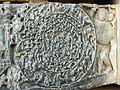 Labyrinth
 -
 Classical 7-Circuit Labyrinth
 -
 Labyrinthus
 -
 Labyrinth
 -
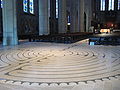 Labyrinth
 -
 Labyrinth at Chartres Cathedral


