Air well (condenser): Difference between revisions
CSV import |
CSV import |
||
| Line 43: | Line 43: | ||
[[Category:Water technology]] | [[Category:Water technology]] | ||
[[Category:Atmospheric water generators]] | [[Category:Atmospheric water generators]] | ||
== Air well (condenser) == | |||
<gallery> | |||
File:Puits_aerien_knappen_trans_83_00.jpg|Air well (condenser) | |||
File:Atmospheric_Water_Vapor_Mean.2005.030.jpg|Air well (condenser) | |||
File:Zibold_condenser_(section).jpg|Air well (condenser) | |||
File:Puits_aerien_knappen_trans_83_10.jpg|Air well (condenser) | |||
File:Puits_aerien_knappen_trans_83_03.jpg|Air well (condenser) | |||
File:Big_Dew_Condenser_in_Corsica.jpg|Air well (condenser) | |||
File:Dr_Sharan_at_condenser_test_ground.JPG|Air well (condenser) | |||
File:Radiative_condenser_(section).jpg|Air well (condenser) | |||
File:Dew_harvest_satapar.jpg|Air well (condenser) | |||
File:Dew_water_from_metal_roofs.jpg|Air well (condenser) | |||
File:Yeti_AC-12_atmospheric_water_generator.jpg|Air well (condenser) | |||
File:Condenser_on_roof_Sayara.JPG|Air well (condenser) | |||
</gallery> | |||
Latest revision as of 11:51, 18 February 2025
Air well (condenser)[edit]
An air well or atmospheric water condenser is a structure or device that collects water from atmospheric water vapor. These devices are designed to harvest water from the air through condensation, utilizing the natural process of dew formation. Air wells have been used historically in various forms and continue to be a subject of interest for sustainable water collection.
History[edit]
The concept of air wells dates back to ancient times, with various cultures developing methods to collect water from the air. The Zibold condenser, for example, was an early 20th-century attempt to create a large-scale air well in Crimea. The design and efficiency of air wells have evolved over time, incorporating modern materials and scientific understanding.
Principles of Operation[edit]
Air wells operate on the principle of condensation, where water vapor in the air is cooled to its dew point, causing it to change into liquid water. This process can be enhanced by using materials with high thermal conductivity or by designing structures that maximize surface area for condensation.
Types of Air Wells[edit]
Passive Air Wells[edit]
Passive air wells rely on natural temperature differences to induce condensation. These structures are often large and made of materials like stone or metal that can radiate heat effectively. The radiative condenser is an example of a passive air well that uses radiative cooling to achieve condensation.
Active Air Wells[edit]
Active air wells use mechanical or electrical means to enhance the condensation process. Devices like the Yeti AC-12 atmospheric water generator use refrigeration cycles to cool air below its dew point, extracting water efficiently.
Applications[edit]
Air wells are used in regions where traditional water sources are scarce. They provide a sustainable method of water collection in arid environments and can be used for agricultural purposes, drinking water supply, and other needs.
Related pages[edit]
Gallery[edit]
-
 Early air well design
 -
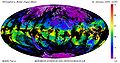 Atmospheric water vapor distribution
 -
 Section of a Zibold condenser
 -
 Air well structure
 -
 Air well in operation
 -
 Large dew condenser in Corsica
 -
 Testing of a condenser
 -
 Section of a radiative condenser
 -
 Dew harvesting setup
 -
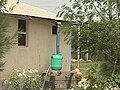 Collecting dew water from metal roofs
 -
 Yeti AC-12 atmospheric water generator


.jpg)


.jpg)


Air well (condenser)[edit]
-
Air well (condenser)
-
Air well (condenser)
-
Air well (condenser)
-
Air well (condenser)
-
Air well (condenser)
-
Air well (condenser)
-
Air well (condenser)
-
Air well (condenser)
-
Air well (condenser)
-
Air well (condenser)
-
Air well (condenser)
-
 Air well (condenser)

