Fur trade: Difference between revisions
CSV import Tags: mobile edit mobile web edit |
CSV import |
||
| Line 26: | Line 26: | ||
{{history-stub}} | {{history-stub}} | ||
{{trade-stub}} | {{trade-stub}} | ||
<gallery> | |||
File:Alberta_1890s_fur_trader.jpg|Fur trade | |||
File:Pelz-Verkaufsstand_in_Tallinn,_Estland.jpg|Fur trade | |||
File:Fur_muff_manufacturer_Ralph_Moses,_New_York,_1949_advertisement.jpg|Fur trade | |||
File:Novgorod1400.png|Fur trade | |||
File:Mongolia_in_1636.svg|Fur trade | |||
File:Sbor_Yasaka.jpg|Fur trade | |||
File:Fur_industry-_hat-making,_Canadian_voyageurs._(_1858-_).jpg|Fur trade | |||
File:Nanfan.svg|Fur trade | |||
File:Ruperts_land.svg|Fur trade | |||
File:Fur_traders_in_canada_1777.jpg|Fur trade | |||
File:Fort_Nez_Perces_Trading_1841_(cropped).jpg|Fur trade | |||
File:George_Caleb_Bingham_001.jpg|Fur trade | |||
</gallery> | |||
Latest revision as of 11:50, 18 February 2025
Fur trade refers to the worldwide buying, selling, and exchange of animal fur. Since the establishment of world trade, fur, with its exceptional warmth, has been a significant commodity. The fur trade played a vital role in the development of Continental Europe, Asia, North America, and Siberia.
History[edit]
The fur trade has a long and complex history. It began in the Prehistoric era, when fur was used for clothing. With the advent of the Middle Ages, fur became a luxury item among Europe's growing bourgeoisie and aristocracy. The demand for fur in Europe drove the exploration and colonization of Siberia, North America, and the South Sea Islands.
North American Fur Trade[edit]
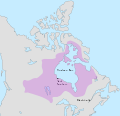
The North American fur trade was an industry and activity related to the acquisition, trade, exchange, and sale of animal furs in North America. Native Americans were the first to start trading fur with Europeans. They traded for goods such as knives, kettles, beads, needles, and blankets. The North American fur trade was at its largest in the late 18th and early 19th centuries.
Siberian Fur Trade[edit]
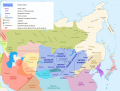
The Siberian fur trade is an important aspect of the Russian colonization of the Americas. After the conquest of the Khanate of Sibir in 1582, the Russian settlers carried out a large-scale fur trade with Asia. This trade was so extensive that it triggered a search for more direct trading routes, leading to the exploration of the Arctic and Pacific Ocean.
Impact[edit]
The fur trade had a significant impact on the historical development of many regions and peoples. It led to the establishment of trading posts and forts, which later grew into cities and towns. The fur trade also had a profound impact on the environment, leading to the overhunting and near extinction of several species.
Modern Fur Trade[edit]
Today, the fur trade is a global industry, dealing in raw fur pelts from a variety of animals. Despite controversy and criticism from animal rights groups, the fur trade continues to be a significant economic activity in many parts of the world.


-
 Fur trade
 -
 Fur trade
 -
 Fur trade
 -
 Fur trade
 -
 Fur trade
 -
 Fur trade
 -
 Fur trade
 -
 Fur trade
 -
 Fur trade
 -
 Fur trade
 -
 Fur trade
 -
 Fur trade


.jpg)


.jpg)

