Angers: Difference between revisions
CSV import Tags: mobile edit mobile web edit |
CSV import |
||
| Line 26: | Line 26: | ||
{{geography-stub}} | {{geography-stub}} | ||
== Angers == | |||
<gallery> | |||
File:Angers_collage.jpg|Angers | |||
File:Angers_vue_generale.jpg|Angers | |||
File:Blason_d'Angers.svg|Angers | |||
File:Blason_ville_fr_Angers-Empire.svg|Angers | |||
File:Aerial_photograph_of_Angers_and_confluence_of_Loire_and_Maine_rivers_-_20050911.jpg|Angers | |||
File:Angers_vers_1850.jpg|Angers | |||
File:Tour_des_anglais,_Angers_(1).jpg|Angers | |||
File:Ardoise_d'_Angers.jpg|Angers | |||
File:Angers_Oisellerie.jpg|Angers | |||
File:Vue_sur_la_Doutre,_Angers.jpg|Angers | |||
File:Angers_-_Tramway_-_Place_du_Ralliement.jpg|Angers | |||
File:Nouvelles_Galeries_(Angers).jpg|Angers | |||
</gallery> | |||
Revision as of 11:49, 18 February 2025

Angers is a city in western France, located in the Pays de la Loire region. It is the capital of the Maine-et-Loire department. Angers is known for its rich history, culture, and its role as an important center during the Anjou dynasty. The city's origins date back to the Roman times, and it has been a significant site throughout the Middle Ages, playing a pivotal role in the history of the Duchy of Anjou.
History
The history of Angers can be traced back to the Roman era, where it was known as Juliomagus. In the Middle Ages, it became a prominent city under the rule of the Counts and Dukes of Anjou, contributing to the city's development and its architectural heritage. The Château d'Angers, a massive medieval castle, stands as a testament to the city's historical significance. Angers was also a center of learning and culture, with the establishment of the University of Angers in the 14th century.
Geography
Angers is situated on the banks of the Maine River, a short distance from where it converges with the Loire River, one of the longest rivers in France. The city's geographical location has played a crucial role in its economic and strategic importance throughout history.
Economy
The economy of Angers is diverse, with sectors such as manufacturing, agriculture, and services playing significant roles. The city is particularly noted for its horticulture industry, earning it the nickname "La Ville Verte" (The Green City). Angers is also a hub for education and research, with several higher education institutions contributing to its vibrant economy.
Culture
Angers boasts a rich cultural scene, with numerous museums, galleries, and theaters. The Angers Museum of Fine Arts and the Jean Lurçat Museum are among the city's cultural highlights. The annual Angers Film Festival is a significant event, attracting filmmakers and enthusiasts from around the world.
Education
The University of Angers is a key educational institution, offering a wide range of programs and contributing to the city's reputation as a center of academic excellence. Other notable institutions include the Catholic University of the West and engineering schools, which attract students from across France and internationally.
Transport
Angers is well-connected by road, rail, and air. The TGV high-speed train service links the city to Paris and other major French cities, making it an accessible destination for both domestic and international travelers. The city also boasts an efficient public transportation system, including buses and trams, facilitating easy movement within the city.
Conclusion
Angers is a city that blends its historical heritage with modern dynamism. Its rich history, cultural vibrancy, and economic strength make it an important city in the Pays de la Loire region and France as a whole. With its continued focus on education, culture, and sustainable development, Angers is poised to remain a significant urban center in the future.

Angers
-
 Angers
 -
 Angers
 -
 Angers
 -
 Angers
 -
 Angers
 -
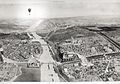 Angers
 -
 Angers
 -
 Angers
 -
 Angers
 -
 Angers
 -
 Angers
 -
 Angers


.jpg)


.jpg)
