Challah: Difference between revisions
CSV import |
CSV import |
||
| Line 24: | Line 24: | ||
{{Judaism-stub}} | {{Judaism-stub}} | ||
<gallery> | |||
File:Challah_Bread_Six_Braid_1.JPG|Six-braid challah | |||
File:Sephardic_Rose-Encrusted_Challah.jpg|Sephardic rose-encrusted challah | |||
File:Challahbread.jpg|Challah bread | |||
File:Challah_Braiding.jpg|Challah braiding | |||
File:ShabbatableS.jpg|Shabbat table with challah | |||
File:Challa_Teller_aus_Basel.jpg|Challah plate from Basel | |||
File:Shabbat_Challos.jpg|Shabbat challos | |||
File:Serwetka_szabasowa_na_chałę,_MŻ_42_01.jpg|Shabbat challah cover | |||
File:חלת_מפתח.jpg|Key-shaped challah | |||
</gallery> | |||
Latest revision as of 11:21, 18 February 2025
Challah is a special type of bread traditionally made to commemorate the Jewish Sabbath and Jewish holidays. It is known for its distinctive braided appearance and its rich, slightly sweet flavor. Challah is a key element in Jewish cuisine and culture, symbolizing both the sanctity of the Sabbath and the bounty of the meal shared among family and friends.
Origins and History[edit]
The origins of Challah can be traced back to ancient times, where it was a customary offering in Jewish rituals. The term "Challah" originally referred to a portion of the dough that was separated and set aside as a tithe for the priests in the times of the Temple in Jerusalem. Over time, the practice evolved, and the bread itself came to be known as Challah. The tradition of baking Challah in a braided form is believed to represent various symbolic meanings, including love, unity, and the intertwining of the past, present, and future.
Ingredients and Preparation[edit]
Challah is made from simple ingredients: flour, water, yeast, sugar, eggs, and oil. Some recipes may include additional ingredients such as honey, raisins, or sesame seeds to enhance the flavor. The dough is kneaded until smooth and then allowed to rise. One of the unique aspects of Challah is its braiding; the dough is divided and rolled into strands, which are then braided together before baking. This braiding can range from simple three-strand braids to complex, multi-strand designs for special occasions.
Cultural Significance[edit]
In Jewish tradition, Challah is more than just a type of bread; it carries deep religious and cultural significance. On the Sabbath and holidays, two loaves of Challah are traditionally placed on the table, covered with a cloth, and blessed before the meal. This practice commemorates the manna that fell from heaven to feed the Israelites in the desert, where a double portion was provided on the day before the Sabbath. Challah is also associated with the concept of hospitality and the welcoming of guests.
Variations[edit]
While the classic Challah is a sweet, egg-rich loaf, there are many regional and familial variations. Some include the use of whole wheat, spelt, or gluten-free flours to accommodate dietary needs or preferences. Others incorporate different flavors and fillings, such as chocolate, cinnamon, or garlic, to create unique twists on the traditional recipe.
See Also[edit]

-
 Six-braid challah
 -
 Sephardic rose-encrusted challah
 -
 Challah bread
 -
 Challah braiding
 -
 Shabbat table with challah
 -
 Challah plate from Basel
 -
 Shabbat challos
 -
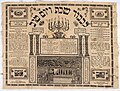 Shabbat challah cover
 -
 Key-shaped challah


