Tooth discoloration: Difference between revisions
From Food & Medicine Encyclopedia
CSV import |
CSV import |
||
| Line 34: | Line 34: | ||
[[Category:Oral hygiene]] | [[Category:Oral hygiene]] | ||
{{stub}} | {{stub}} | ||
<gallery> | |||
File:Tired_teeth.jpg|Tooth discoloration | |||
File:Cross_sections_of_teeth_labels.png|Cross sections of teeth with labels | |||
File:VITA_shade_guide.jpg|VITA shade guide | |||
File:VITA_shade_guide2.jpg|VITA shade guide | |||
File:Betel.jpg|Betel | |||
File:MildFluorosis02-24-09.jpg|Mild fluorosis | |||
File:4724507933_07ac954c27_bFluorose.jpg|Fluorosis | |||
File:Mummery.jpg|Tooth discoloration | |||
File:Filling.jpg|Tooth filling | |||
</gallery> | |||
Revision as of 11:20, 18 February 2025
Tooth Discoloration is a common dental condition characterized by changes in the color, hue, and translucency of teeth. It can be caused by various factors, including dietary habits, medications, and certain diseases.
Causes
Tooth discoloration can be caused by a variety of factors, including:
- Dietary habits: Consuming certain foods and drinks, such as coffee, tea, wine, and cola, can stain the teeth. Tobacco use can also cause tooth discoloration.
- Medications: Certain medications, such as tetracycline and doxycycline, can cause tooth discoloration. Antihistamines, antipsychotics, and high blood pressure medications can also cause discoloration.
- Diseases: Certain diseases can affect the enamel and dentin, leading to tooth discoloration. Treatments for certain conditions, such as chemotherapy and radiation, can also cause discoloration.
- Aging: As people age, the outer layer of enamel on their teeth gets worn away, revealing the naturally yellow dentin underneath.
Types
There are three main types of tooth discoloration:
- Extrinsic: This occurs when the outer layer of the tooth (the enamel) is stained. Coffee, wine, cola, and other drinks or foods can stain the teeth. Smoking also causes extrinsic stains.
- Intrinsic: This is when the inner structure of the tooth (the dentin) darkens or gets a yellow tint. This can be caused by exposure to too much fluoride as a child while teeth are developing.
- Age-related: This is a combination of extrinsic and intrinsic factors. Dentin naturally yellows over time. The enamel that covers the teeth gets thinner with age, which allows the dentin to show through.
Treatment
Treatment for tooth discoloration depends on the cause and type of discoloration. Options may include:
- Professional teeth cleaning: This can remove most of the external stains caused by food and tobacco.
- Teeth whitening: This is a common solution for extrinsic and age-related discoloration. It involves a bleaching process that can be done at home or by a dentist.
- Dental veneers: These are custom shells made of porcelain or composite resin that cover the front sides of the teeth. They can be used to treat severe discoloration that doesn't respond to whitening.
Prevention
Preventing tooth discoloration involves maintaining good oral hygiene and making certain lifestyle changes. This includes:
- Brushing and flossing regularly
- Regular dental check-ups
- Limiting consumption of staining foods and drinks
- Quitting smoking
 | This medical article is a stub. You can help WikiMD by expanding the page. |
-
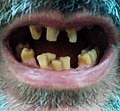 Tooth discoloration
 -
 Cross sections of teeth with labels
 -
 VITA shade guide
 -
 VITA shade guide
 -
 Betel
Betel -
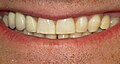 Mild fluorosis
 -
 Fluorosis
 -
 Tooth discoloration
 -
 Tooth filling


