N,N-Dimethyltryptamine: Difference between revisions
CSV import |
CSV import |
||
| Line 26: | Line 26: | ||
{{Psychoactive substance}} | {{Psychoactive substance}} | ||
{{Hallucinogen-stub}} | {{Hallucinogen-stub}} | ||
<gallery> | |||
File:DMT.svg|N,N-Dimethyltryptamine chemical structure | |||
File:Dimethyltryptamine_molecule_spacefill.png|Space-filling model of N,N-Dimethyltryptamine | |||
File:N,N-DMT_Freebase_and_Vape_cartridge.jpg|N,N-Dimethyltryptamine freebase and vape cartridge | |||
File:Aya-preparation.jpg|Ayahuasca preparation | |||
File:D-Tryp.jpg|N,N-Dimethyltryptamine | |||
File:DMT_biosynthetic_pathway.png|Biosynthetic pathway of N,N-Dimethyltryptamine | |||
File:Dmt1234.jpg|N,N-Dimethyltryptamine | |||
</gallery> | |||
Latest revision as of 11:08, 18 February 2025
N,N-Dimethyltryptamine (DMT or N,N-DMT) is a chemical substance that occurs in many plants and animals and which is both a derivative and a structural analog of tryptamine. It can be consumed as a psychedelic drug and has historically been prepared by various cultures for ritual purposes as an entheogen.
Chemistry[edit]
DMT is a derivative of tryptamine with two additional methyl groups at the amine nitrogen atom. DMT is a white crystalline powder that is derived from certain plants found in Mexico, South America, and parts of Asia. It is typically consumed in the following ways: vaporized or smoked in a pipe; consumed orally in brews like ayahuasca; or snorted or injected on rare occasions.
Pharmacology[edit]
DMT is a powerful hallucinogenic drug. When it is inhaled or consumed, usually in a number of successive doses, it can produce profound and dramatic changes in sensory perception, mood, and thought. These effects may include intense visual hallucinations, euphoria, paranoia, and anxiety.
History and culture[edit]
DMT has been used for over 1000 years in religious ceremonies and rituals. It is traditionally consumed in the form of ayahuasca, a tea-like beverage made from the leaves of the Psychotria viridis plant. In modern times, DMT is often synthesized in laboratories, but it is also still used in traditional contexts for spiritual healing and exploration.
Legal status[edit]
DMT is classified as a Schedule I drug under the Controlled Substances Act of 1970 in the United States; this means that it is illegal to manufacture, buy, possess, or distribute (sell, trade or give) without a DEA license. In some other countries, DMT is not listed as a controlled substance and can be used legally.
See also[edit]
References[edit]
<references />
| Psychoactive substances | ||||||||||
|---|---|---|---|---|---|---|---|---|---|---|
This psychoactive substance-related article is a stub.
|

This article is a hallucinogen-related stub. You can help WikiMD by expanding it!
-
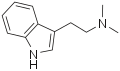 N,N-Dimethyltryptamine chemical structure
 -
 Space-filling model of N,N-Dimethyltryptamine
 -
 N,N-Dimethyltryptamine freebase and vape cartridge
 -
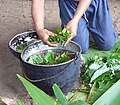 Ayahuasca preparation
 -
 N,N-Dimethyltryptamine
 -
 Biosynthetic pathway of N,N-Dimethyltryptamine
 -
 N,N-Dimethyltryptamine


