Non-stick surface: Difference between revisions
CSV import |
CSV import |
||
| Line 30: | Line 30: | ||
{{materials-stub}} | {{materials-stub}} | ||
{{food-stub}} | {{food-stub}} | ||
<gallery> | |||
File:Blintzes_in_frying_pan.jpg|Blintzes cooking in a non-stick frying pan | |||
File:Castiron-skillets.jpg|Cast iron skillets | |||
File:Belgian_waffles_cooked_in_a_Krampouz_cast-iron_waffle_iron.JPG|Belgian waffles cooked in a Krampouz cast-iron waffle iron | |||
File:Super-hydrophobic_coating.jpg|Super-hydrophobic coating | |||
</gallery> | |||
Latest revision as of 05:01, 18 February 2025
Non-stick surface refers to surfaces engineered to reduce the ability of other materials to stick to it. Non-stick is often used to refer to surfaces coated with polytetrafluoroethylene (PTFE), a well-known brand of which is "Teflon."
History[edit]
The concept of non-stick surfaces was discovered accidentally by Roy Plunkett in 1938 while he was working with gases related to Freon refrigerants. When one of his experiments went awry, he ended up with a substance that was extremely slippery and resistant to heat and chemical reaction. This substance was later patented and named Teflon.
Uses[edit]
Non-stick surfaces are most commonly found in the kitchen, particularly in cookware such as frying pans, baking trays, and saucepans. The non-stick coating allows food to brown without sticking to the pan. This property makes the cookware easier to clean and reduces the need for cooking oil or fat, promoting healthier cooking.
Non-stick surfaces are also used in other applications such as iron soleplates, and in the industrial sector where sticky processes can cause problems.
Health and Environmental Concerns[edit]
There have been concerns about the health and environmental impact of non-stick surfaces, particularly those using PTFE. When overheated, PTFE can release fumes which can cause flu-like symptoms, a condition known as "polymer fume fever". There are also concerns about the environmental impact of PTFE production, as it involves the use of perfluorooctanoic acid (PFOA), a persistent environmental pollutant.
Alternatives[edit]
There are several alternatives to traditional non-stick surfaces, including ceramic coatings, anodized aluminum, and seasoned cast iron. These alternatives aim to provide the same non-stick benefits without the potential health and environmental concerns associated with PTFE.
See Also[edit]


-
 Blintzes cooking in a non-stick frying pan
 -
 Cast iron skillets
 -
 Belgian waffles cooked in a Krampouz cast-iron waffle iron
 -
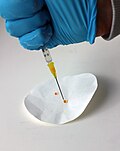 Super-hydrophobic coating


