Volatility (chemistry): Difference between revisions
CSV import |
CSV import Tags: mobile edit mobile web edit |
||
| Line 43: | Line 43: | ||
[[Category:Chemical properties]] | [[Category:Chemical properties]] | ||
{{Chemistry-stub}} | {{Chemistry-stub}} | ||
<gallery> | |||
File:Bromine_in_a_vial.png|Bromine in a vial | |||
File:Vapor_pressure_chart.svg|Vapor pressure chart | |||
File:AlkaneBoilingMeltingPoint.png|Alkane boiling and melting points | |||
File:Crude_Oil_Distillation-en.svg|Crude oil distillation | |||
</gallery> | |||
Latest revision as of 04:58, 18 February 2025
Volatility (chemistry)
In chemistry, volatility refers to the measure of the tendency of a substance to vaporize. It has implications in the fields of thermodynamics, physical chemistry, and chemical engineering. The term is primarily used to describe liquids, but it can also apply to solids and gases.
Definition[edit]
Volatility is a material quality which describes how readily a substance vaporizes. At a given temperature and pressure, a substance with high volatility is more likely to exist in the gaseous state than a substance with low volatility.
Factors Influencing Volatility[edit]
Several factors influence the volatility of a substance. These include temperature, pressure, and the intermolecular forces present within the substance.
Temperature[edit]
The volatility of a substance increases with temperature. This is because as the temperature rises, the average energy of the molecules also increases. This allows more molecules to overcome the intermolecular forces keeping them in the liquid or solid state, thus enabling them to enter the gaseous state.
Pressure[edit]
The volatility of a substance decreases with increasing pressure. Higher pressure makes it harder for molecules to escape from the liquid or solid state into the gaseous state.
Intermolecular Forces[edit]
The strength of the intermolecular forces within a substance also affects its volatility. Substances with strong intermolecular forces are less volatile because the molecules are held tightly together. Conversely, substances with weak intermolecular forces are more volatile because the molecules can more easily escape into the gaseous state.
Applications in Chemistry[edit]
Volatility finds applications in several areas of chemistry. For instance, in distillation, a common method of separation of mixtures, the differences in the volatility of the components are exploited to separate them. Similarly, in chromatography, the volatility of the components of a mixture affects their separation on the chromatographic column.
See Also[edit]
References[edit]
<references group="" responsive="1"></references>

-
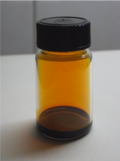 Bromine in a vial
 -
 Vapor pressure chart
 -
 Alkane boiling and melting points
 -
 Crude oil distillation


