Tooth resorption: Difference between revisions
CSV import |
CSV import |
||
| Line 49: | Line 49: | ||
{{Dentistry-stub}} | {{Dentistry-stub}} | ||
{{medicine-stub}} | {{medicine-stub}} | ||
<gallery> | |||
File:External_tooth_resorption_9.jpg|External tooth resorption | |||
File:Tooth_resorption_x_Ray_9.jpg|Tooth resorption X-ray | |||
File:Wurzelresorption_Zahn_25_und_keilfoermiger_Defekt_PD_4.jpg|Wurzelresorption Zahn 25 und keilförmiger Defekt PD 4 | |||
File:Wurzelresorption_Zahn_25_und_keilfoermiger_Defekt_PD_5.jpg|Wurzelresorption Zahn 25 und keilförmiger Defekt PD 5 | |||
</gallery> | |||
Revision as of 04:47, 18 February 2025
Tooth resorption is a pathological condition characterized by the progressive loss of dental hard tissue, specifically the dentine and enamel, due to the action of osteoclasts. This process can affect any tooth and may lead to tooth loss if not properly managed. Tooth resorption is classified into two main types: internal resorption and external resorption, each with distinct causes, features, and treatment approaches.
Types of Tooth Resorption
Internal Resorption
Internal resorption originates from within the tooth, typically starting in the pulp chamber. It is often triggered by trauma or chronic inflammation, leading to the activation of clastic cells that resorb the dentine and sometimes extend to the enamel. Clinically, internal resorption may present as a pinkish area on the tooth due to the highly vascular granulation tissue visible through the thin remaining layers of the tooth. Diagnosis is usually confirmed through radiographs that show a characteristic "moth-eaten" or irregular radiolucency within the tooth structure.
External Resorption
External resorption begins on the outer surfaces of the tooth, either at the root (external root resorption) or the crown (external cervical resorption). This condition can be caused by several factors, including mechanical trauma, periodontal disease, orthodontic treatment, or idiopathic reasons. External resorption is more common than internal resorption and can lead to significant tooth structure loss if not treated promptly. Radiographic examination is crucial for diagnosis, revealing irregular or diffuse resorption patterns along the affected tooth's external surfaces.
Causes
The exact cause of tooth resorption can vary depending on the type and location. Common factors include:
- Trauma or injury to the tooth
- Chronic inflammation or infection
- Orthodontic movement
- Systemic conditions such as Paget's disease or hyperparathyroidism
- Idiopathic, where no specific cause is identified
Symptoms
Symptoms of tooth resorption may include:
- Tooth discoloration
- Sensitivity to hot, cold, or sweet stimuli
- Pain or discomfort, especially in advanced cases
- Visible signs of tooth structure loss in severe cases
Diagnosis
Diagnosis of tooth resorption involves a thorough clinical examination and radiographic imaging. Dental radiographs are essential for assessing the extent and location of resorption. Advanced imaging techniques, such as CBCT (Cone Beam Computed Tomography), may be utilized for detailed evaluation in complex cases.
Treatment
Treatment of tooth resorption depends on the type, location, and severity of the condition. Options may include:
- Monitoring of asymptomatic and stable lesions
- Root canal therapy for internal resorption
- Surgical intervention for accessible external resorption lesions
- Tooth extraction in cases where the tooth cannot be preserved
Prevention
Preventing tooth resorption involves minimizing risk factors such as avoiding dental trauma and managing periodontal disease. Regular dental check-ups are essential for early detection and management of resorptive lesions.
Conclusion
Tooth resorption is a significant dental condition that requires prompt diagnosis and appropriate management to preserve tooth structure and maintain oral health. Understanding the types, causes, and treatment options for tooth resorption is crucial for dental professionals and patients alike.


-
 External tooth resorption
 -
 Tooth resorption X-ray
 -
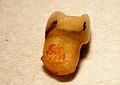 Wurzelresorption Zahn 25 und keilförmiger Defekt PD 4
 -
 Wurzelresorption Zahn 25 und keilförmiger Defekt PD 5


