Calcaneal fracture: Difference between revisions
CSV import |
CSV import |
||
| Line 47: | Line 47: | ||
File:Calcaneal_fracture_neutral_lposition.jpg|Calcaneal fracture in neutral position | File:Calcaneal_fracture_neutral_lposition.jpg|Calcaneal fracture in neutral position | ||
File:Leg_Stand.jpg|Leg stand position | File:Leg_Stand.jpg|Leg stand position | ||
</gallery> | |||
== Calcaneal_fracture == | |||
<gallery> | |||
File:CalcanealfractCT.png|CT scan showing a calcaneal fracture | |||
File:Bohler's_angle_(raster).jpg|Diagram illustrating Böhler's angle | |||
File:Gissane.jpg|Diagram illustrating Gissane's angle | |||
File:Calcaneal_fracture_neutral_lposition.jpg|X-ray of a calcaneal fracture in neutral position | |||
File:Leg_Stand.jpg|Leg in standing position | |||
</gallery> | </gallery> | ||
Revision as of 04:36, 18 February 2025
Calcaneal Fracture
A calcaneal fracture is a break of the calcaneus (heel bone). It is commonly caused by a high-energy event such as a car accident or a fall from height.
Symptoms
Symptoms of a calcaneal fracture can include pain, bruising, swelling, inability to walk or bear weight on the foot, and deformity of the heel.
Causes
The most common cause of a calcaneal fracture is a fall from a height, such as from a ladder or roof. Other causes can include motor vehicle accidents and sports injuries.
Diagnosis
Diagnosis of a calcaneal fracture is typically made through a combination of physical examination and imaging tests. These can include X-rays, CT scans, and MRI.
Treatment
Treatment for a calcaneal fracture can vary depending on the severity of the fracture. Non-surgical treatment options can include rest, ice, compression, and elevation (RICE), pain medication, and physical therapy. Surgical treatment options can include open reduction and internal fixation (ORIF), in which the bone is repositioned and secured with screws or plates.
Prognosis
The prognosis for a calcaneal fracture can vary widely depending on the severity of the fracture and the patient's overall health. Some patients may recover fully with no lasting effects, while others may experience long-term pain, stiffness, and decreased mobility.
See Also
References
<references />
 | |
|---|---|
 |
 |
Calcaneal_fracture
-
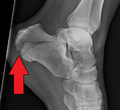 Calcaneal fracture
 -
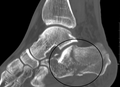 CT scan of calcaneal fracture
 -
 Böhler's angle measurement
 -
 Gissane's angle
 -
 Calcaneal fracture in neutral position
 -
 Leg stand position


.jpg)


Calcaneal_fracture
-
CT scan showing a calcaneal fracture
-
Diagram illustrating Böhler's angle
-
Diagram illustrating Gissane's angle
-
X-ray of a calcaneal fracture in neutral position
-
Leg in standing position
