Linnaean taxonomy: Difference between revisions
CSV import Tags: mobile edit mobile web edit |
CSV import |
||
| Line 32: | Line 32: | ||
{{Taxonomy-stub}} | {{Taxonomy-stub}} | ||
<gallery> | |||
File:Linné-Systema_Naturae_1735.jpg|Title page of Systema Naturae, 1735 | |||
File:SN-p837.jpg|Page 837 of Systema Naturae | |||
File:Kalmia_latifolia_Great_Smoky.jpg|Kalmia latifolia in the Great Smoky Mountains | |||
File:Linnaeus_-_Regnum_Animale_(1735).png|Regnum Animale from Systema Naturae, 1735 | |||
</gallery> | |||
Latest revision as of 04:29, 18 February 2025
Linnaean taxonomy is a system of biological classification established by Carl Linnaeus, a Swedish botanist, zoologist, and physician, in the 18th century. Linnaeus's work, particularly through his books Systema Naturae (first edition published in 1735), laid the foundations for the modern scheme of taxonomy. His system for naming, ranking, and classifying organisms is still in wide use today (with many modifications). Linnaean taxonomy categorizes organisms into hierarchical groups based on shared characteristics. The primary ranks in Linnaean taxonomy are Kingdom, Phylum, Class, Order, Family, Genus, and Species, with species being the most specific.
History[edit]
Linnaeus initially divided nature into three kingdoms: Animal, Vegetable, and Mineral. Minerals were later removed from taxonomy by Linnaeus himself, and his work primarily focused on the Animal and Vegetable kingdoms, which correspond to what we now call animals and plants. Over time, more kingdoms were added to accommodate the growing understanding of life forms, such as fungi and bacteria, leading to the recognition that the original Linnaean system was overly simplistic for classifying the diversity of life.
Classification System[edit]
The Linnaean system uses a hierarchical structure where each level of classification, or rank, groups organisms based on shared characteristics. The ranks from most general to most specific are:
- Kingdom
- Phylum (or Division in plants)
- Class
- Order
- Family
- Genus
- Species
Each species is given a two-part name, a binomial nomenclature, consisting of the genus name (capitalized) and the species identifier (lowercase). This system of nomenclature ensures that each organism has a unique name, facilitating clear and consistent communication among scientists worldwide.
Modern Developments[edit]
While the Linnaean system laid the groundwork for biological classification, it has been modified and expanded with the advent of genetics and molecular biology. The discovery of DNA and the ability to analyze genetic relationships among organisms have led to significant changes in the classification and understanding of life on Earth. This has resulted in the proposal of new taxonomic categories, such as domains, which are higher than kingdoms and include Archaea, Bacteria, and Eukarya.
Despite these advancements, the Linnaean system remains a fundamental tool in biology for organizing and naming organisms. Its simplicity and hierarchical structure make it a useful framework for understanding the relationships among different forms of life.
Criticism and Limitations[edit]
The Linnaean taxonomy has faced criticism for its anthropocentric approach and its reliance on morphological characteristics, which may not accurately reflect evolutionary relationships. The system's hierarchical nature also struggles to accommodate the complexities of horizontal gene transfer and the genetic diversity found within and between species.
Conclusion[edit]
Linnaean taxonomy is a cornerstone of biological classification that has endured for centuries. While it has evolved over time and faced challenges from new scientific discoveries, its influence on the organization and naming of living organisms remains significant. As science advances, the Linnaean system continues to adapt, demonstrating its enduring relevance in the field of biology.
-
 Title page of Systema Naturae, 1735
 -
 Page 837 of Systema Naturae
 -
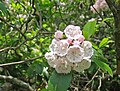 Kalmia latifolia in the Great Smoky Mountains
 -
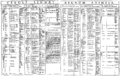 Regnum Animale from Systema Naturae, 1735


.png)
