Icerudivirus: Difference between revisions
CSV import Tags: mobile edit mobile web edit |
CSV import |
||
| Line 25: | Line 25: | ||
[[Category:RNA viruses]] | [[Category:RNA viruses]] | ||
{{Virus-stub}} | {{Virus-stub}} | ||
<gallery> | |||
File:Rudiviridae_virion.jpg|Icerudivirus virion structure | |||
File:F29-02-9780123846846-Rudiviridae-Genomes.png|Genomic structure of Rudiviridae | |||
File:F29-03-9780123846846-Rudiviridae-Fig3-SIRV2-infection.png|SIRV2 infection process | |||
</gallery> | |||
Latest revision as of 04:10, 18 February 2025
Icerudivirus is a genus of viruses within the realm of Riboviria, which encompasses RNA viruses. This genus is part of the family Quadriviridae, a group of viruses known for their unique replication mechanisms and structural complexities. Icerudiviruses are characterized by their non-segmented, double-stranded RNA genomes, which distinguish them from other RNA viruses that typically have single-stranded or segmented genomes. The study of Icerudivirus contributes to the broader understanding of viral evolution, replication, and the mechanisms through which viruses interact with their hosts.
Classification[edit]
Icerudivirus, within the family Quadriviridae, falls under the order Picornavirales. This order includes a diverse array of viruses that infect a wide range of hosts, from plants and fungi to insects and mammals, including humans. The classification of Icerudivirus is based on its genomic structure, replication mechanism, and phylogenetic relationships with other viruses within Riboviria.
Genome and Structure[edit]
The genome of Icerudivirus is notable for its double-stranded RNA (dsRNA) configuration, a trait that is relatively rare among RNA viruses. This dsRNA genome is enclosed within an icosahedral capsid, which is composed of protein subunits that form a protective shell around the viral RNA. This structure is crucial for the virus's ability to protect its genetic material from degradation and to facilitate its entry into host cells.
Replication Cycle[edit]
The replication cycle of Icerudivirus begins with the virus attaching to the surface of a susceptible host cell. Following attachment, the virus is internalized, and the viral genome is released into the cell's cytoplasm. Here, the dsRNA genome serves as a template for the synthesis of viral proteins and for the replication of new viral RNA. The newly synthesized viral components are then assembled into progeny virions, which are released from the host cell to initiate new rounds of infection.
Pathogenicity and Clinical Significance[edit]
The pathogenicity of Icerudiviruses varies depending on the specific virus and the host organism. In some cases, infections can be asymptomatic or result in mild symptoms. However, certain Icerudiviruses can cause significant disease in their host organisms, leading to economic losses in agricultural settings or health issues in infected animals. Understanding the pathogenic mechanisms of Icerudiviruses is essential for developing effective prevention and treatment strategies.
Research and Applications[edit]
Research on Icerudivirus and related viruses within the Quadriviridae family has implications for virology, molecular biology, and evolutionary biology. Studies focusing on the replication mechanisms, host interactions, and evolutionary history of these viruses provide insights into the fundamental processes of viral life cycles. Additionally, knowledge gained from Icerudivirus research can inform the development of antiviral therapies and diagnostic tools.
See Also[edit]

-
 Icerudivirus virion structure
 -
 Genomic structure of Rudiviridae
 -
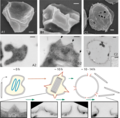 SIRV2 infection process


