Frozen yogurt: Difference between revisions
CSV import Tags: mobile edit mobile web edit |
CSV import |
||
| Line 33: | Line 33: | ||
[[Category:Yogurt-based dishes]] | [[Category:Yogurt-based dishes]] | ||
{{food-stub}} | {{food-stub}} | ||
<gallery> | |||
File:French_fry_frozen_yoghurt.jpg|Frozen yogurt with French fries | |||
File:Blueberry_frozen_yoghurt_(4937999312).jpg|Blueberry frozen yogurt | |||
File:Yogurtland_Yogurt_High_Res.jpg|Frozen yogurt from Yogurtland | |||
</gallery> | |||
Latest revision as of 04:04, 18 February 2025
 | |
|---|---|
 |
 |
Frozen yogurt, also known as fro-yo or frogurt, is a popular dessert made with yogurt and sometimes other dairy products. Frozen yogurt is a common alternative to ice cream due to its lower fat content and slightly tart flavor. It is served cold and often comes in a variety of flavors and toppings, such as fruits, nuts, and syrups.
History[edit]
The concept of frozen yogurt was developed in the United States in the 1970s as a soft serve dessert. Initially, it was introduced as a healthier alternative to ice cream, capitalizing on the growing health consciousness among Americans. The popularity of frozen yogurt spiked in the 1980s with the emergence of several frozen yogurt chains.
Preparation[edit]
Frozen yogurt is made by mixing yogurt with sugar, and sometimes other dairy products, to achieve a creamy texture. The mixture is then pasteurized and homogenized before being frozen. Modern frozen yogurt machines then churn the mixture to incorporate air, which helps achieve a light, soft serve texture. The final product can be served immediately or stored in a freezer for later consumption.
Nutritional Information[edit]
Frozen yogurt typically contains fewer calories and less fat than traditional ice cream, making it a popular choice for those looking to indulge in a dessert with a lower caloric intake. However, the nutritional content can vary significantly depending on the ingredients used and the addition of toppings or flavorings.
Varieties[edit]
There are many varieties of frozen yogurt, ranging from traditional flavors like vanilla and chocolate to more exotic options like mango or green tea. Some frozen yogurts are made with alternative milk products, such as almond milk or coconut milk, to cater to those with dairy allergies or lactose intolerance.
Popularity[edit]
The popularity of frozen yogurt has fluctuated over the years, with significant peaks in the 1980s and early 2010s. Its appeal lies in its versatility, allowing consumers to customize their dessert with a wide range of toppings and flavors. Frozen yogurt shops often offer a self-serve model, where customers can mix and match flavors and toppings as they please.
See Also[edit]

-
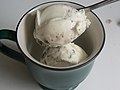 Frozen yogurt with French fries
 -
Blueberry frozen yogurt
-
Frozen yogurt from Yogurtland


.jpg)
