Stamppot: Difference between revisions
CSV import Tags: mobile edit mobile web edit |
CSV import |
||
| Line 27: | Line 27: | ||
{{Dutch-cuisine-stub}} | {{Dutch-cuisine-stub}} | ||
{{food-stub}} | {{food-stub}} | ||
<gallery> | |||
File:Boerenkool_stamppot.jpg|Boerenkool stamppot | |||
File:2015_0330_Hutspot_karbonade.jpg|Hutspot with karbonade | |||
File:2015_1021_Andijviestamppot_met_speklap.jpg|Andijviestamppot with speklap | |||
</gallery> | |||
Latest revision as of 03:47, 18 February 2025
Stamppot is a traditional Dutch dish made from a combination of potatoes mashed with one or several vegetables. These vegetables may include various kinds of kale, cabbage, spinach, turnip greens, and carrot. The dish is customarily served with a smoked sausage.
History[edit]
The origins of Stamppot are not entirely clear, but it is believed to have been a staple food in the Netherlands for many centuries. The dish is particularly associated with the colder months, as the ingredients used are typically harvested in the late autumn and winter.
Preparation[edit]
The preparation of Stamppot begins with the boiling of potatoes and vegetables in separate pots. Once cooked, the potatoes are mashed and mixed with the vegetables. The dish is typically seasoned with salt and pepper, and sometimes with other spices such as nutmeg. The final touch is usually a smoked sausage, which is served on top of the mashed potatoes and vegetables.
Variations[edit]
There are many variations of Stamppot, depending on the vegetables used. Some of the most popular variations include Stamppot Boerenkool (made with kale), Stamppot Hutspot (made with carrots and onions), and Stamppot Zuurkool (made with sauerkraut). Each variation has its own unique taste and texture, but all are hearty and filling dishes that are perfect for a cold winter's day.
Cultural Significance[edit]
Stamppot is more than just a dish in the Netherlands; it is a part of Dutch culture and tradition. It is often served on special occasions, such as the celebration of Sinterklaas (Saint Nicholas' Day) on December 5th. The dish is also a common feature in Dutch literature and art, symbolizing the simplicity and comfort of home.
See Also[edit]
This Dutch cuisine related article is a stub. You can help WikiMD by expanding it.

-
 Boerenkool stamppot
 -
 Hutspot with karbonade
 -
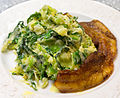 Andijviestamppot with speklap


