Cervical pregnancy: Difference between revisions
CSV import Tags: mobile edit mobile web edit |
CSV import |
||
| Line 25: | Line 25: | ||
[[Category:Pregnancy]] | [[Category:Pregnancy]] | ||
{{medicine-stub}} | {{medicine-stub}} | ||
<gallery> | |||
File:Cervical_pregnancy.jpg|Cervical pregnancy | |||
File:Cervical_pregnancy_-_with_descriptions.jpg|Cervical pregnancy - with descriptions | |||
</gallery> | |||
Revision as of 01:44, 18 February 2025
Cervical pregnancy is a rare form of ectopic pregnancy where the fertilized egg implants itself in the cervix instead of the uterus. This condition is considered a medical emergency due to the high risk of severe bleeding and other complications.
Causes
The exact cause of cervical pregnancy is unknown. However, it is believed to be associated with certain risk factors such as previous cervical surgery, in vitro fertilization (IVF), and previous ectopic pregnancies.
Symptoms
The symptoms of cervical pregnancy are similar to those of normal pregnancy in the early stages. However, as the pregnancy progresses, the woman may experience abnormal vaginal bleeding, severe lower abdominal pain, and signs of miscarriage.
Diagnosis
Cervical pregnancy is usually diagnosed through a combination of ultrasound and hCG levels. The ultrasound may show a gestational sac in the cervix, and the hCG levels may not rise as expected in a normal pregnancy.
Treatment
The treatment of cervical pregnancy aims to remove the pregnancy tissue and stop the bleeding. This can be achieved through medication, surgery, or a combination of both. The choice of treatment depends on the woman's overall health, the severity of her symptoms, and her future fertility plans.
Prognosis
With early diagnosis and appropriate treatment, the prognosis for women with cervical pregnancy is generally good. However, the condition can be life-threatening if not treated promptly. It can also affect a woman's future fertility.
See also

-
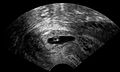 Cervical pregnancy
 -
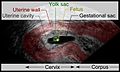 Cervical pregnancy - with descriptions


