Pseudomonilicaryon anser: Difference between revisions
CSV import Tags: mobile edit mobile web edit |
CSV import |
||
| Line 20: | Line 20: | ||
[[Category:Microbiology]] | [[Category:Microbiology]] | ||
{{Bacteria-stub}} | {{Bacteria-stub}} | ||
<gallery> | |||
File:Pseudomonilicaryon_anser.jpg|Pseudomonilicaryon anser | |||
File:Muller_vibrio_anser.jpg|Muller vibrio anser | |||
</gallery> | |||
Latest revision as of 01:38, 18 February 2025
Pseudomonilicaryon anser is a hypothetical bacterial species that has not been recognized or identified within the scientific community. As such, it does not exist in medical or microbiological literature. The name appears to be a fabrication or a misunderstanding, possibly combining elements of real bacterial nomenclature with fictional or mistaken terms. In the context of microbiology and medicine, it is crucial to rely on accurate and verified information. Therefore, this article will instead provide an overview of how bacterial species are classified and named, and the importance of accurate identification in medical science.
Classification and Nomenclature of Bacteria[edit]
Bacteria are classified into species based on a variety of criteria, including genetic makeup, morphology, metabolic capabilities, and ecological niche. The International Code of Nomenclature of Bacteria (ICNB) governs the naming of bacteria. A bacterial species name is binomial, consisting of a genus name followed by a specific epithet, both of which are italicized. For example, Escherichia coli is a well-known species belonging to the genus Escherichia.
Importance of Accurate Bacterial Identification[edit]
Accurate identification of bacterial species is crucial in various fields, including medicine, where it can influence the choice of antibiotics in the treatment of bacterial infections. In environmental science, identifying bacteria can help assess the health of ecosystems. In industry, specific bacterial species are used in the production of food, pharmaceuticals, and biofuels.
Common Methods for Identifying Bacteria[edit]
Several methods are employed to identify bacterial species, including:
- Microscopy: Observing the shape, size, and arrangement of bacteria.
- Culture Techniques: Growing bacteria on selective media to isolate specific species.
- Molecular Biology Techniques: Using PCR and DNA sequencing to identify bacteria based on their genetic material.
- Biochemical Tests: Determining the metabolic and enzymatic activities of bacteria.
Conclusion[edit]
While Pseudomonilicaryon anser does not represent a real bacterial species, the study and classification of bacteria are vital to many aspects of human health and environmental management. Accurate identification and understanding of bacterial species underpin much of modern medicine and biotechnology.

-
 Pseudomonilicaryon anser
 -
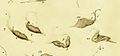 Muller vibrio anser


