Buffalo meat: Difference between revisions
CSV import |
CSV import |
||
| Line 33: | Line 33: | ||
{{food-stub}} | {{food-stub}} | ||
==Buffalo_meat== | |||
<gallery> | |||
File:Water_buffalo,_Little_Hungerford,_West_Berkshire_-_geograph.org.uk_-_398640.jpg|Water buffalo in Little Hungerford, West Berkshire | |||
File:Yam_tin_khwai.jpg|Yam tin khwai | |||
</gallery> | |||
Latest revision as of 01:24, 18 February 2025
Buffalo meat is a type of meat that comes from the water buffalo and the American bison, commonly referred to as buffalo in North America. Buffalo meat is known for its lean, slightly sweet flavor, and is often used as a healthier alternative to beef.
History[edit]
Buffalo meat has been consumed by humans for thousands of years. In North America, the Native Americans relied heavily on the American bison for food, clothing, and tools. In Asia, the water buffalo has been a staple source of protein for centuries.
Nutritional Value[edit]
Buffalo meat is highly nutritious. It is lower in fat and calories than beef, but higher in protein. It also contains important nutrients such as iron, zinc, and vitamin B12.
Culinary Uses[edit]
Buffalo meat can be used in a variety of dishes. It can be ground for burgers, cut into steaks, or slow-cooked in stews. It is also commonly used in jerky due to its lean nature.
Environmental Impact[edit]
Raising buffalo for meat can have a lower environmental impact than raising cattle. Buffalo are more efficient at converting grass to meat, and they can thrive in harsher conditions than cattle.
Health Concerns[edit]
While buffalo meat is generally considered healthy, it can carry diseases such as brucellosis and tuberculosis. Proper cooking can kill these bacteria, but it is important to source meat from reputable suppliers.
See Also[edit]

Buffalo_meat[edit]
-
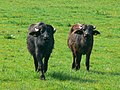 Water buffalo in Little Hungerford, West Berkshire
 -
 Yam tin khwai


