Sulforidazine: Difference between revisions
CSV import Tags: mobile edit mobile web edit |
CSV import |
||
| Line 24: | Line 24: | ||
{{Pharma-stub}} | {{Pharma-stub}} | ||
{{Medicine-stub}} | {{Medicine-stub}} | ||
<gallery caption="Sulforidazine"> | |||
File:Sulforidazine.svg|Chemical structure of Sulforidazine | |||
File:Sulforidazine3d.png|3D model of Sulforidazine | |||
File:Sulforidazine_synthesis.svg|Synthesis pathway of Sulforidazine | |||
</gallery> | |||
Latest revision as of 01:20, 18 February 2025
Sulforidazine is a type of antipsychotic medication used primarily in the treatment of schizophrenia. It belongs to the class of typical antipsychotics, also known as first-generation antipsychotics, which were the first group of drugs developed to treat psychotic disorders.
Pharmacology[edit]
Sulforidazine works by blocking dopamine receptors in the brain. Dopamine is a neurotransmitter, a type of chemical messenger that transmits signals in the brain and other areas of the body. By blocking these receptors, sulforidazine helps to balance the levels of dopamine and other neurotransmitters in the brain, which can help to reduce symptoms of schizophrenia.
Uses[edit]
Sulforidazine is primarily used to treat schizophrenia, a mental disorder characterized by abnormal social behavior and failure to understand reality. It can help to reduce symptoms such as hallucinations, delusions, and disorganized thinking. In some cases, it may also be used to treat other mental health conditions, as determined by a healthcare provider.
Side Effects[edit]
Like all medications, sulforidazine can cause side effects. Common side effects can include drowsiness, dizziness, and dry mouth. More serious side effects can include movement disorders, such as tardive dyskinesia, and cardiovascular effects, such as irregular heart rhythms. It is important for individuals taking sulforidazine to be closely monitored by their healthcare provider to manage any potential side effects.
History[edit]
Sulforidazine was first developed in the 1960s as part of the first generation of antipsychotic medications. It was widely used for several decades, but its use has declined in recent years due to the development of newer, second-generation antipsychotics, which are generally associated with fewer side effects.
See Also[edit]


- Sulforidazine
-
 Chemical structure of Sulforidazine
 -
 3D model of Sulforidazine
 -
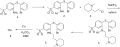 Synthesis pathway of Sulforidazine


